


10 Common Galvanized Steel Storage Mistakes That Lead to Corrosion
Galvanized Steel offers excellent resistance to rust and corrosion thanks to the protective zinc coating on its surface. However, this protection is not unlimited. Improper storage and handling can lead to white rust, surface discoloration, and, in severe cases, deterioration of the zinc coating and corrosion of the underlying steel. This article examines 10 common mistakes in storing and handling galvanized steel and explains how to avoid damage, maintain product quality, and reduce unnecessary costs.
1. Storing Galvanized Steel in Damp or Poorly Ventilated Areas
Moisture is one of the main causes of storage-related corrosion in galvanized steel. In poorly ventilated warehouses, condensation can form on steel surfaces and become trapped between closely packed sheets or coil wraps. This can lead to wet storage stain, commonly known as white rust, which appears as white or gray deposits on the zinc coating.
- Store galvanized steel in a dry, well-ventilated warehouse.
- Monitor relative humidity and minimize condensation. Maintaining humidity below 60%, where practical, can help reduce corrosion risks, although this is not a universal limit.
- Keep coils and sheet bundles away from damp floors, walls, and areas exposed to water.
2. Placing Galvanized Steel Coils or Sheets Directly on the Ground
Placing galvanized steel coils or sheet bundles directly on the floor is a common storage mistake. Moisture, dirt, and contaminants on the floor can come into contact with the zinc coating, increasing the risk of surface staining and localized corrosion.
Use suitable storage racks, dry wooden pallets, coil cradles, or other approved supports to keep the material off the ground. Supports should be dry, stable, and appropriate for the weight and dimensions of the products. Adequate clearance should also be maintained to facilitate ventilation, inspection, and cleaning. The required clearance depends on the storage system and site conditions rather than a single universal minimum height.
3. Covering Galvanized Steel with Non-Breathable Plastic or Tarpaulins
Covering galvanized steel with plastic sheeting or tightly wrapped tarpaulins may seem like an effective way to prevent corrosion. However, if moisture enters or condensation develops beneath the covering, it can become trapped against the steel surface and accelerate the formation of wet storage stain.
For indoor storage, keep galvanized steel in a dry, well-ventilated area and follow the manufacturer's packaging recommendations. When temporary outdoor protection is necessary, use a weather-resistant covering arranged to allow airflow and drainage. Avoid placing plastic sheeting directly against damp galvanized surfaces or sealing wet products inside impermeable packaging.
4. Cleaning Galvanized Steel with Water or Unsuitable Chemicals
Dust and other contaminants sometimes need to be removed from galvanized steel before processing or use. However, unsuitable cleaning chemicals, abrasive materials, or water left on the surface can damage the zinc coating or encourage corrosion.
- For routine cleaning, use a clean, soft, dry cloth. Where washing is necessary, use a cleaning product suitable for galvanized steel, following the manufacturer's recommendations. Mild, pH-neutral cleaners are generally suitable for many routine cleaning applications.
- Avoid aggressive acids, highly corrosive cleaning agents, and abrasive methods that may damage the protective coating. After wet cleaning, rinse when required and dry the surface thoroughly before storage.
5. Stacking Galvanized Steel Without Adequate Air Circulation
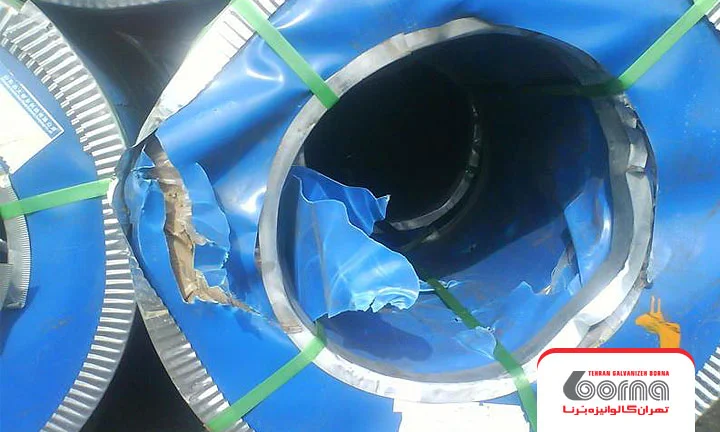
When galvanized steel sheets are tightly packed or coils are exposed to moisture during storage, water can become trapped between adjacent surfaces. Limited airflow prevents the moisture from evaporating, creating conditions that promote wet storage stain between the sheets or coil wraps.
Maintain sufficient space between stored bundles and coils for ventilation, safe handling, and inspection. Use appropriate dry spacers or supports where required by the storage arrangement. If a sheet bundle becomes wet, separate the sheets as soon as safely practical to allow thorough drying. Wet coils should be assessed and handled according to the steel manufacturer's recommendations. Avoid unnecessary separation or uncoiling of dry, properly packaged products.
6. Storing Galvanized Steel Near Corrosive Chemicals or Incompatible Metals
Galvanized steel can be affected by corrosive chemicals and certain combinations of dissimilar metals. Acids, chemical vapors, and other aggressive substances may attack the zinc coating. In addition, galvanic corrosion can occur when electrically connected dissimilar metals are exposed to a common electrolyte, such as moisture or saltwater.
Not every instance of contact between different metals results in galvanic corrosion. The risk depends on the metals involved, the presence of an electrolyte, and the exposure conditions. Contact with metals such as copper or brass may be particularly problematic in damp environments.
- Store galvanized steel away from acids, fertilizers, corrosive chemicals, and incompatible materials.
- Prevent unnecessary contact with dissimilar metals in damp conditions. Where appropriate, use non-conductive separators and keep storage areas clean and dry.
7. Leaving Galvanized Steel Outdoors Without Adequate Protection
Although galvanized steel is designed to resist atmospheric corrosion, prolonged exposure to rain, standing water, and contaminants during storage can affect its surface condition. Moisture trapped inside sheet bundles or between coil wraps is especially problematic because it can cause wet storage stain and, under severe conditions, more extensive corrosion.
Outdoor storage should therefore be avoided whenever suitable indoor facilities are available. If temporary outdoor storage is unavoidable, take the following precautions:
- Provide a weather-resistant shelter or covering with sufficient ventilation.
- Keep coils and bundles on suitable dry supports above a stable, well-drained surface.
- Arrange storage and protective coverings to prevent water accumulation and allow effective drainage.
8. Improper Handling with Forklifts, Chains, or Lifting Equipment
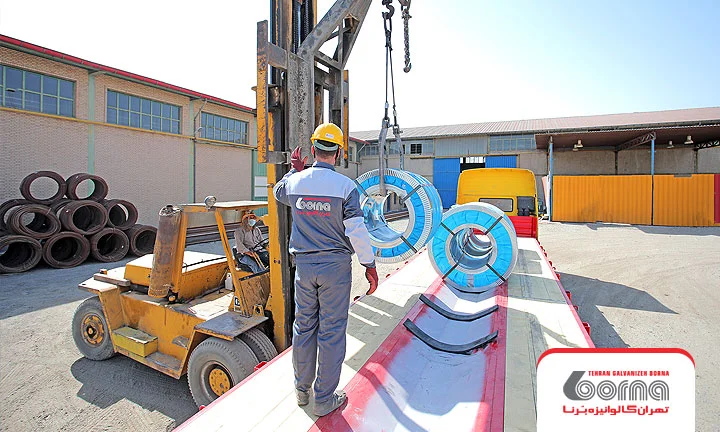
Incorrect handling can damage galvanized steel even before it reaches the production line. Unprotected forklift forks, unsuitable lifting equipment, or excessive contact pressure can scratch the zinc coating, dent sheet edges, or deform coils. Severe coating damage may expose the underlying steel and increase the risk of corrosion.
- Use appropriately rated webbing slings or other suitable lifting equipment, with protective padding where necessary.
- Protect forklift contact points and avoid pushing, dragging, or rolling coils and sheet bundles with forklift forks.
- Use purpose-designed coil lifters, C-hooks, coil cradles, or approved handling equipment appropriate for the product's weight, dimensions, and orientation.
9. Ignoring Temperature Changes and Condensation
Significant temperature changes between day and night can create condensation on galvanized steel surfaces. This occurs when the steel temperature falls below the dew point of the surrounding air. Moisture may then accumulate on exposed surfaces or become trapped between tightly packed sheets and coil wraps, increasing the risk of white rust.
- Maintain reasonably stable storage temperatures and avoid rapid temperature changes where possible.
- Provide appropriate ventilation and humidity control to reduce condensation risks.
- When moving cold steel into a warmer environment, allow sufficient time for temperature adjustment and follow suitable condensation-prevention procedures before opening protective packaging.
10. Storing Galvanized Steel for Long Periods Without Regular Inspection
Another common mistake is leaving galvanized steel in storage for extended periods without checking its condition. Even in a well-managed warehouse, changes in humidity, damaged packaging, or accidental water exposure can create conditions that lead to corrosion.
- Inspect stored coils and sheet bundles regularly for moisture, packaging damage, surface discoloration, and signs of wet storage stain. Monthly inspections may form part of a routine schedule, but more frequent checks are necessary after water exposure or under higher-risk conditions.
- Record the arrival date, storage location, and batch information for each product. Apply a first-in, first-out (FIFO) inventory management system where appropriate to avoid unnecessary long-term storage.
Conclusion: Proper Storage Helps Preserve Galvanized Steel Quality
Galvanized steel can maintain its protective properties and surface condition over extended storage periods when appropriate precautions are taken. However, poor storage practices can lead to discoloration, wet storage stain, coating deterioration, and avoidable financial losses.
Simple measures such as maintaining a dry and well-ventilated warehouse, keeping products off the ground, preventing trapped moisture, using appropriate handling equipment, and carrying out regular inspections can significantly reduce these risks. If wet storage stain develops, its severity should be assessed before deciding whether cleaning, further inspection, or corrective action is necessary.
Tehran Galvanizeh Borna has extensive experience in the trading and distribution of galvanized, prepainted, and cold-rolled steel in Iran. Through its warehousing network, the company recognizes the importance of appropriate storage and handling practices in maintaining the condition of steel products throughout the supply chain.
At Ahan Shop, we help customers source galvanized steel from Iranian and international producers based on their required specifications and applications. For assistance with galvanized steel sourcing, product specifications, or quotations, contact the expert team at Tehran Galvanizeh Borna on +98 21 57602.
How would you rate this article?
Help us provide better content by registering your rating.
Related Articles
-

What Is Galvanizing? Methods and Applications
Learn how galvanizing protects steel, compare hot-dip and cold galvanizing methods, and explore their applications and key coating quality criteria.
60 minutes of study time -
Shipping Container Steel: Types, Thicknesses and Selection Guide
Which steel is best for shipping containers? Compare Corten, galvanized, and prepainted steel, with a thickness guide for container walls and roofs.
40 minutes of study time -

Steel Sheets and Plates for Industrial Sheds
Compare hot-rolled, galvanized and prepainted steel for industrial sheds. Explore sheet thicknesses, roofing and cladding applications, and selection guidelines.
40 minutes of study time
Add a comment
10 Common Galvanized Steel Storage Mistakes That Lead to Corrosion