


Steel Sheets and Plates for Industrial Sheds
Selecting the right steel sheets and plates for industrial building construction involves more than comparing product prices or material thicknesses. Steel plates used to fabricate columns and roof rafters serve a different purpose from profiled sheets used for roof and wall cladding. Consequently, the selection criteria for these materials are not the same. Structural strength and stability, climatic conditions, corrosion exposure, thermal insulation requirements, and maintenance costs all influence the choice of steel products and thicknesses for an industrial building.
Where members of the primary steel frame are fabricated from plate, structural steel plates must be selected according to the grades and thicknesses specified in the engineering drawings. For roof and wall cladding, available options include galvanized steel sheets, prepainted steel sheets, aluminum-zinc alloy-coated steel, and insulated sandwich panels. Each option has different performance characteristics and application requirements. The most appropriate material is one that meets the building's structural, environmental, and operational requirements. Working with an experienced steel trading company can also help buyers evaluate available specifications and identify suitable products for their projects.
What Is an Industrial Shed, and How Is Steel Used in Its Construction?
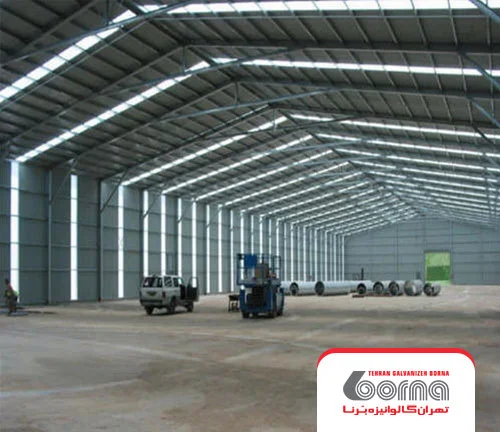
An industrial shed is a building designed to provide a large, open internal space, often with relatively long structural spans. Typical applications include manufacturing, warehousing, equipment maintenance, machinery storage, agricultural activities, and indoor sports facilities. Many industrial sheds feature steel-framed structures and pitched roofs, although their roof configurations and structural systems can vary.
In conventional steel-framed industrial buildings, the primary columns and roof rafters form part of the main load-bearing system, transferring structural loads through the frame to the foundations. Roof purlins and wall girts (side rails) are secondary framing members that support the roof and wall cladding and transfer loads to the primary frame. Not all industrial buildings use welded built-up sections; hot-rolled structural sections and steel truss systems are also widely used.
Steel sheets and plates used in industrial building construction can be classified into three main categories:
- Structural Steel Plates: Used to fabricate the webs and flanges of built-up steel members, built-up columns, stiffener plates, connection plates, and other load-bearing components.
- Roofing and Wall Cladding Sheets: Used for roof coverings, external wall cladding, gutters, ridge caps, and flashing details.
- Sheets and Plates for Ancillary Components: Used for doors, internal linings, maintenance walkway flooring, and other supplementary building components.
Roofing and wall cladding must be designed to withstand the loads acting on their surfaces and transfer those loads to the supporting structure. Although appropriately designed and installed cladding can contribute to the restraint and stability of secondary steelwork, it does not generally replace the building's primary load-bearing frame. Understanding this distinction is essential when selecting steel products for industrial building construction.
The following sections examine the main types of steel sheets and plates used in industrial sheds, their applications, advantages, limitations, and key considerations when sourcing materials for each part of the building.
1. Hot-Rolled Structural Steel Plate for Beams, Columns, and Connections
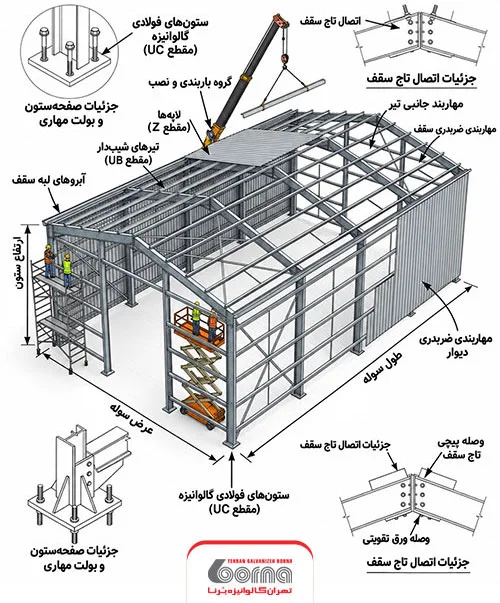
Hot-rolled steel, commonly referred to as black steel in some markets, is produced through the hot-rolling process. In buildings with welded built-up steel frames, hot-rolled structural steel plates are used to fabricate roof rafters, columns, connection plates, stiffener plates, and column base plates. Because these components are responsible for resisting and transferring structural loads, steel selection must follow the material specifications established by the structural design.
When manufacturing welded built-up I-sections and plate girders, steel plates are cut to the required dimensions and welded together to form the web and flanges of the section. The web is the central plate connecting the two flanges and plays a major role in resisting shear forces, while the flanges provide much of the section's bending resistance. This fabrication method allows engineers to specify the section depth, flange width, and individual plate thicknesses according to the forces and structural requirements of each member.
Which Structural Steel Grades Are Suitable for Industrial Buildings?
Depending on the applicable design codes and project specifications, suitable materials may include EN 10025-2 structural steel grades in the S235, S275, and S355 families or grades covered by the relevant ASTM specifications. The appropriate grade depends on the required mechanical strength, product thickness, service conditions, fabrication requirements, and applicable design standards. The complete grade designation, including any required subgrade, must be specified in accordance with the relevant material standard.
In the Iranian steel market, the designations ST37 and ST52 are widely used. However, these commercial terms alone are not sufficient for a complete technical purchasing specification. Any comparison with modern steel grades should be based on the applicable reference standard and the properties documented in the manufacturer's material test certificate (MTC). Similar nominal strength values do not necessarily indicate identical material properties or establish that two grades can be substituted without further engineering assessment.
Advantages:
- Custom Fabrication of Structural Sections: Plate dimensions and thicknesses can be specified according to structural calculations, allowing built-up beams and columns to be designed for the required building span, eaves height, and design loads.
- Fabrication and Weldability: Suitable structural steel plates can be cut, welded, and assembled into different frame components using appropriate fabrication procedures and qualified welding procedures.
- Versatility in Structural Applications: In addition to fabricated beams and columns, hot-rolled structural steel plates can be used for column base plates, connection plates, stiffeners, and other reinforcement components.
- Potential for Material Optimization: Properly designed built-up sections can help optimize steel consumption and structural weight. However, the potential savings depend on the structural configuration, design requirements, fabrication methods, and overall project conditions.
Limitations and Considerations:
- Corrosion Protection Requirements: Uncoated hot-rolled carbon steel is susceptible to corrosion when exposed to moisture and aggressive environmental conditions. Appropriate surface preparation and protective coating systems should therefore be specified according to the building's service environment and corrosion protection requirements.
What Should Buyers Consider When Purchasing Hot-Rolled Steel Plates for Industrial Buildings?
The purchase of hot-rolled structural steel plates should be based on the requirements specified in the project's engineering drawings and technical documentation. Before ordering, buyers should confirm the steel grade, applicable material standard, nominal thickness, dimensional tolerances, plate dimensions, and required mill test certificate (MTC).
Plate dimensions should also be coordinated with the project's cutting plans and fabrication drawings to improve material utilization and minimize cutting waste.
Material traceability is another important consideration. Delivered steel plates should be traceable to the relevant mill test certificates, heat numbers, and material identification records. Any proposed substitution of steel grade or change in plate thickness must be reviewed and approved by the responsible structural engineer.
Thicker plates or higher-strength steel grades are not necessarily the best choice for every industrial building. Material selection should consider strength, structural stability, deflection limits, fabrication feasibility, and overall cost. The objective is to source steel that meets the approved design requirements while supporting accurate, efficient, and reliable fabrication of the building's structural frame.
2. Galvanized Steel for Industrial Roof and Wall Cladding
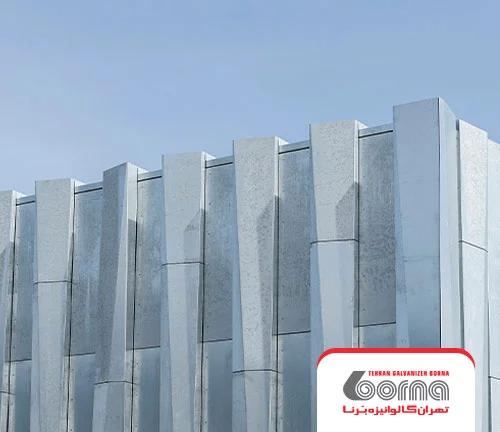
Galvanized steel is steel coated with a protective layer of zinc to improve its resistance to rust and corrosion. The zinc coating specification, coating integrity, and service environment all influence the material's durability. This is particularly relevant for industrial roofing and wall cladding, where external surfaces are exposed to rain, moisture, temperature variations, and other atmospheric conditions.
When roll-formed into trapezoidal profiles or sinusoidal corrugations, galvanized steel sheets are widely used for roof cladding and external wall cladding on industrial buildings. They can also be used to manufacture gutters, ridge caps, flashings, and other roofing and cladding accessories. Profiling increases the sheet's out-of-plane stiffness, allowing it to function as a relatively lightweight cladding material. However, its load-bearing capacity depends on the steel thickness and grade, profile geometry, support spacing, and applied loads.
From a cost perspective, galvanized steel sheeting can be a practical option for industrial buildings requiring a straightforward, functional roof and wall cladding system. However, the overall cost should also account for thermal and acoustic insulation, supporting members, fasteners, installation, and maintenance. The price of the steel sheets represents only one component of the total installed cost of the building envelope.
Advantages:
- Corrosion Resistance: The zinc coating helps protect the underlying steel against atmospheric corrosion. When appropriately specified for the service environment, it can reduce corrosion-related maintenance requirements and extend the service life of the cladding.
- Formability and Versatility: Galvanized steel can be roll-formed into corrugated and trapezoidal profiles and fabricated into complementary components, making it suitable for a range of industrial roofing and wall cladding applications.
- Relatively Low Dead Load: Profiled galvanized steel sheeting generally imposes a lower dead load than many heavier conventional roofing and wall systems. Its relatively low weight can also simplify material handling and installation.
- Cost-Effective Construction: Where the technical specifications and environmental conditions permit, galvanized steel can provide a balance between material cost, installation efficiency, and durability. Its corrosion-resistant coating may also help reduce maintenance expenditure over the building's service life.
- Long-Term Durability: Galvanized steel sheets can provide corrosion protection for many years when the zinc coating mass is suitable for the environment and appropriate handling, installation, drainage, and maintenance practices are followed. The expected service life must be assessed according to the product specification and actual exposure conditions rather than assuming a fixed service life for all galvanized roofing products.
Limitations and Considerations:
- Additional Thermal and Acoustic Insulation Requirements: Single-skin galvanized steel sheeting does not, by itself, provide substantial thermal or acoustic insulation. Industrial buildings requiring temperature control or reduced rain noise should incorporate an appropriately designed insulated roof and wall cladding system.
What Should Buyers Consider When Purchasing Galvanized Steel for Industrial Buildings?
When sourcing galvanized steel sheets for industrial buildings, steel thickness and zinc coating specifications should be evaluated separately. The steel thickness influences the sheet's weight and mechanical performance, while the zinc coating mass is an important factor in its resistance to atmospheric corrosion. A thicker steel sheet does not necessarily have a heavier or more durable zinc coating.
For example, under EN 10346, the coating designation Z275 specifies a minimum total zinc coating mass of 275 g/m² across both surfaces of the sheet, determined by the three-spot test. This designation does not refer to the steel substrate thickness or to a coating mass of 275 g/m² on each individual surface.
Material selection should therefore consider the specified nominal thickness, its measurement basis, and applicable tolerances, steel grade, zinc coating mass, sheet profile, and environmental exposure conditions. For roofing applications, the selected profile must also provide adequate load-bearing capacity and deflection performance for the design loads and the specified roof purlin spacing.
Selecting an unsuitable roofing sheet solely to reduce the initial material cost may lead to higher expenditure on maintenance, repairs, or premature cladding replacement. Buyers should therefore evaluate the complete roof and wall system, including its structural performance and expected service conditions.
3. Prepainted Steel for Industrial Roof and Wall Cladding
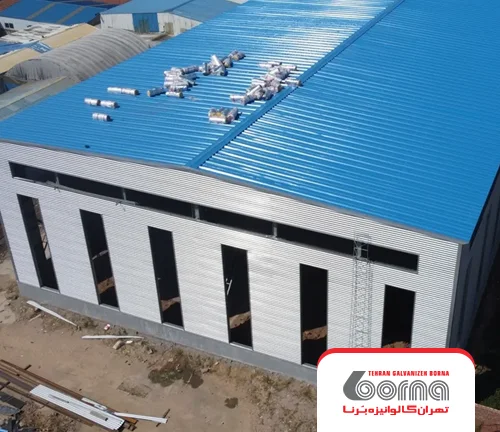
Prepainted steel is widely used for industrial roofing and wall cladding, combining corrosion protection with a consistent, factory-applied finish. A common product is prepainted galvanized steel (PPGI), produced from zinc-coated steel that undergoes surface pretreatment followed by the application of primer and topcoat layers. The paint system is applied through a continuous coil-coating process, with the coating layers cured under controlled conditions.
In prepainted galvanized steel, the metallic zinc coating and organic paint system provide complementary protection. The zinc coating helps protect the steel substrate against corrosion, while the paint system provides an additional barrier against environmental exposure and delivers the required color and surface finish. Product quality therefore depends on more than appearance; the steel substrate, metallic coating, surface pretreatment, and paint system must all be evaluated.
Prepainted steel sheets can be roll-formed into trapezoidal and sinusoidal profiles for roof and wall cladding applications. Compatible prepainted steel can also be used to manufacture ridge caps, flashings, and other cladding accessories, helping maintain a consistent appearance across the building envelope.
Advantages:
- Wide Color Selection and Consistent Appearance: Prepainted steel is available in a range of colors and finishes, allowing architects and building owners to coordinate the cladding with the building's design and corporate visual identity.
- Enhanced Weather Resistance: A properly specified paint coating system, combined with the underlying metallic coating, can improve resistance to atmospheric exposure and contribute to long-term cladding durability.
- Formability: Suitable prepainted steel grades can be roll-formed into different roofing and wall cladding profiles and fabricated into matching accessories, provided the steel and coating system are compatible with the required forming operations.
- Reduced On-Site Painting Requirements: Prepainted steel is supplied with a factory-applied finish and generally does not require initial painting after installation. However, damaged areas and exposed edges may require treatment in accordance with the manufacturer's recommendations.
Limitations and Considerations:
- Susceptibility to Coating Damage: Dragging sheets against one another, using unsuitable tools, or improper handling can cause scratches, paint damage, or deterioration of the protective coating layers. Where damage exposes the underlying metallic coating or steel substrate, the risk of localized corrosion may increase, depending on the extent of the damage and exposure conditions.
- Higher Initial Material Cost: Prepainted steel generally carries a higher purchase price than comparable unpainted galvanized steel because of the additional surface pretreatment, primer application, and factory-applied paint coating. The overall economic comparison should also consider installation, finishing requirements, maintenance, and expected service life.
What Specifications Should Buyers Check When Purchasing Prepainted Steel for Industrial Buildings?
When sourcing prepainted steel sheets for industrial roofing and wall cladding, color selection is only one part of the specification process. RAL color codes identify standardized colors but do not define the quality, thickness, or durability of the paint coating. Two products with the same RAL color may perform differently in terms of corrosion resistance, UV resistance, color retention, and resistance to mechanical damage.
Before placing an order, buyers should confirm the base steel thickness, metallic coating type and designation, paint system, topcoat and reverse-side coating thicknesses, sheet profile, and effective cover width.
It is also important to review the manufacturer's coating performance warranty, where available, together with any limitations relating to coastal, humid, or aggressive industrial environments. These conditions can significantly affect the expected performance of the coating system.
ASTM A755/A755M covers hot-dip metallic-coated steel sheet that is prepainted through a continuous coil-coating process for exterior-exposed building products. However, specifying this standard alone does not establish every performance requirement for a particular project. The selected product's steel grade, metallic coating, paint system, dimensions, and performance characteristics must also meet the building's technical specifications and environmental exposure requirements.
The most suitable prepainted steel for industrial roofing and wall cladding combines the required appearance with an appropriately specified corrosion protection system and reliable technical properties. Evaluating these factors before purchasing can help reduce the risk of premature coating deterioration, early maintenance, or cladding replacement.
4. Aluminum-Zinc Alloy-Coated Steel for Industrial Roof and Wall Cladding
Aluminum-zinc alloy-coated steel, commonly associated with products marketed under names such as Aluzinc and Galvalume, consists of a steel substrate with a protective aluminum-zinc alloy coating. It should not be confused with solid aluminum sheet, as the underlying material is steel.
ASTM A792/A792M covers 55% aluminum-zinc alloy-coated steel sheet produced by the hot-dip coating process. The standard covers different coating types, including aluminum-zinc-silicon (Type 1) and aluminum-zinc-magnesium-silicon (Type 2) coatings. Buyers should therefore verify the exact coating composition, coating mass designation, and applicable product standard rather than assuming that all aluminum-zinc and aluminum-zinc-magnesium coatings are interchangeable.
Advantages:
- Roofing and Wall Cladding Applications: Suitable grades can be used to manufacture profiled steel sheets for industrial roofing and external wall cladding.
- Corrosion Protection: The metallic alloy coating can provide effective corrosion resistance in environments compatible with the specified product.
- Available Finishes: Depending on the manufacturer and product range, aluminum-zinc alloy-coated steel may be supplied with an unpainted metallic finish or a factory-applied organic paint coating.
Limitations and Considerations:
- Environmental Compatibility: Coating performance depends on the operating environment, including moisture exposure, industrial pollutants, and contact with corrosive substances.
- Contact with Incompatible Materials: Direct contact with certain metals or building materials may increase the risk of corrosion under specific exposure conditions.
- Installation Requirements: Fasteners, joints, flashing details, and installation practices must comply with the manufacturer's technical recommendations.
No single service life can be assigned to every aluminum-zinc alloy-coated steel product, and it should not be assumed that this coating system will outperform conventional galvanized steel under all conditions. Selection should consider the environmental corrosivity, chemical exposure, moisture conditions, coating specifications, and intended service life.
Material compatibility is particularly important when specifying fasteners, flashing components, and other roofing accessories. The risk of galvanic corrosion and potential adverse interactions with adjacent materials should be assessed as part of the overall cladding design.
5. Insulated Sandwich Panels for Industrial Roofs and Walls
An insulated sandwich panel is not a single steel sheet. It is a composite building product consisting of two facings bonded to an insulating core. The external and internal facings are commonly manufactured from metallic-coated and prepainted steel, while the insulation core may consist of materials such as polyisocyanurate (PIR), polyurethane (PUR), or mineral wool, depending on the panel specification.
Advantages:
- Integrated Cladding and Insulation: Combines external or internal facing materials with an insulating core in a single factory-manufactured panel.
- Installation Efficiency: Factory-produced panels can simplify installation and reduce the number of separate construction operations.
- Thermal Performance: When correctly specified and installed, insulated panels can help reduce heat transfer through the building envelope and support more effective indoor temperature control.
- Documented Performance: Suitable products can be selected according to their documented thermal performance and reaction-to-fire classification. Any fire resistance rating must be supported by testing or classification of the relevant panel assembly and its installation configuration.
Limitations and Considerations:
- Higher Initial Material Cost: Insulated sandwich panels generally have a higher initial purchase cost than comparable single-skin metal cladding.
- Joint Sealing and Installation: Proper detailing of panel joints, fasteners, seals, and penetrations is essential for maintaining weathertightness and insulation performance.
- Core and Facing Specifications: Buyers must assess the thickness and material of each metal facing, insulation core type, overall panel thickness, and documented fire performance separately.
For heated or air-conditioned industrial buildings, the economic comparison between insulated sandwich panels and single-skin steel sheeting should consider the complete roof and wall assembly, including insulation requirements, supporting structure, installation costs, and operational energy consumption.
A lower-cost single-skin roofing sheet does not necessarily result in a lower total installed cost or life-cycle cost when the additional insulation and construction requirements are taken into account.
6. Aluminum Sheets for Lightweight Roofing and Wall Cladding
Profiled aluminum sheets can also be used for industrial roofing and external wall cladding, particularly where low material weight or specific corrosion protection requirements influence material selection.
Advantages:
- Low Weight: Aluminum has a substantially lower density than steel, making it suitable for applications where reducing cladding weight is important.
- Formability: Suitable aluminum alloys can be formed into different roofing and wall cladding profiles.
- Corrosion Resistance: Aluminum offers good corrosion resistance in many atmospheric environments when the appropriate alloy, surface finish, and installation details are specified.
Limitations and Considerations:
- Material Cost: Aluminum roofing and cladding products may have a higher initial cost than comparable steel products, depending on the alloy, thickness, surface finish, and market conditions.
- Lower Elastic Modulus: Aluminum has a lower modulus of elasticity than steel, which influences panel stiffness, deflection, and required support spacing. The appropriate sheet thickness and profile must be determined through engineering assessment.
- Greater Thermal Expansion: Aluminum generally undergoes greater thermal expansion and contraction than steel. Fasteners, joints, and panel lengths must be designed to accommodate this movement.
- Dissimilar Metal Contact: The potential for galvanic corrosion should be considered where aluminum is connected to other metals in the presence of moisture.
When considering aluminum as an alternative to steel roofing or wall cladding, the same sheet thickness should not be assumed to provide equivalent structural performance. Material properties, profile geometry, span, support conditions, and design loads must be evaluated together.
7. Cold-Rolled Steel and Tread Plates for Ancillary Building Components and Flooring
In addition to structural steel and roof and wall cladding products, industrial buildings require steel sheets and plates for various ancillary applications. Cold-rolled steel sheets and steel tread plates are used for different purposes: cold-rolled steel is commonly selected for fabricated components requiring a smooth surface finish and dimensional accuracy, while tread plates are used for certain industrial platforms, stair landings, and access walkways.
Cold-Rolled Steel Sheets for Doors, Interior Linings, and Fabricated Components
Cold-rolled steel sheets, sometimes referred to as oiled cold-rolled steel when supplied with a temporary protective oil film, are manufactured through cold reduction and subsequent processing operations.
Their smooth, consistent surface finish and relatively tight dimensional tolerances make them suitable for components where appearance, fabrication accuracy, and forming characteristics are important.
In industrial buildings, cold-rolled steel sheets can be used to manufacture selected metal doors, cabinets, equipment enclosures, interior linings, and bent or formed components.
The formability of cold-rolled steel depends on the specified grade and mechanical properties. For components requiring extensive bending or deep drawing, buyers should select a grade compatible with the intended manufacturing process.
Advantages:
- Good Surface Quality: A relatively smooth and uniform surface suitable for applications requiring a consistent finish.
- Dimensional Accuracy: Tight dimensional tolerances and good surface consistency for suitable products and grades.
- Formability: Appropriate cold-rolled steel grades can be used to manufacture precision-formed components, bent parts, and products requiring complex shapes.
Limitations and Considerations:
- Potentially Higher Material Cost: Cold-rolled steel may be more expensive than comparable hot-rolled products because of the additional processing involved.
- Grade-Dependent Structural Suitability: General-purpose cold-rolled forming grades should not automatically be substituted for specified structural steel grades. Load-bearing capacity depends on the material grade, component geometry, thickness, and structural design, rather than the rolling process alone.
- Corrosion Protection Requirements: Uncoated cold-rolled carbon steel requires suitable protection against corrosion when exposed to moisture or aggressive environmental conditions.
The protective oil film applied to some cold-rolled steel products provides temporary corrosion protection during storage and transportation. It is not a substitute for a permanent corrosion protection system.
Consequently, uncoated cold-rolled steel is not commonly specified for external industrial roofing or wall cladding without an appropriate protective coating system.
Steel Tread Plates for Platforms, Stair Landings, and Access Walkways
Steel tread plate, also known as checker plate or diamond plate, features a raised surface pattern and is commonly used for industrial platform floors, stair landings, and maintenance access walkways.
The raised pattern can help improve surface grip and slip resistance, although actual slip performance depends on the pattern, surface condition, contamination, footwear, and operating environment.
The term tread plate describes the surface pattern rather than the steel grade, mechanical properties, or protective coating. For example, uncoated carbon steel tread plate may require additional corrosion protection when installed in damp or corrosive environments.
Advantages:
- Raised Surface Pattern: Provides a textured walking surface that can help improve grip under suitable conditions.
- Industrial Applications: Suitable grades and thicknesses can be used for selected platforms, access routes, stair landings, and maintenance areas.
Limitations and Considerations:
- Corrosion Exposure: Uncoated carbon steel tread plates may be susceptible to corrosion in wet or chemically aggressive environments.
When purchasing steel tread plates, buyers should confirm whether the specified thickness refers to the nominal base plate thickness excluding the raised pattern or the overall thickness including the projections.
The raised pattern height must not be added to the base plate thickness when assessing load-bearing capacity unless explicitly permitted by the applicable design method. The plate grade, supporting span, loading conditions, and applicable design requirements must also be considered.
Overall, cold-rolled steel sheets are commonly selected for fabricated components requiring a smooth surface finish, dimensional accuracy, and appropriate forming properties. Steel tread plates are used in selected flooring and access applications where a raised surface pattern is beneficial.
The choice between these products should be based on the intended application, mechanical loading, environmental exposure, required surface characteristics, and corrosion protection specifications.
How Does Sheet Profile Affect Roof Performance?
The terms "galvanized" and "prepainted" describe the material's protective coating or surface finish, while "trapezoidal" and "sinusoidal" refer to the sheet's cross-sectional profile. A steel sheet can therefore be galvanized, prepainted, and roll-formed into a trapezoidal profile.
The profile depth, corrugation pitch, cross-sectional geometry, roof slope, and lap arrangement influence the sheet's load-bearing performance, stiffness, and rainwater drainage. Two roofing sheets with the same nominal thickness may have significantly different allowable support spans. Profile selection should therefore be based on the manufacturer's load-span tables, taking into account the specified design loads, support conditions, and deflection limits.
When calculating the quantity of roofing sheets required, buyers should use the effective cover width. The original flat sheet width and the overall width of a profiled sheet differ from the width of roof or wall surface actually covered once the sheets are installed. Side laps between adjacent sheets reduce the effective coverage and must be considered when estimating material quantities.
What Specifications Should Buyers Check When Purchasing Steel for Industrial Sheds?
Before comparing supplier quotations, buyers should prepare a consistent technical specification for the required steel products. Depending on the application, this specification should include:
- Steel product type and grade.
- Nominal thickness, measurement basis, and dimensional tolerances.
- Metallic coating type and coating mass designation, where applicable.
- Paint system specifications for prepainted products.
- Sheet length, width, and profile geometry.
- Effective cover width after installation.
- Mill test certificates, product identification, and material traceability documentation, as applicable.
- Packaging, handling, transportation, and delivery requirements.
For load-bearing structural components, the mill test certificate (MTC), material identification, and delivered steel specifications should be checked against the approved engineering drawings. For roofing and wall cladding, buyers should also obtain the manufacturer's load-span tables, installation instructions, fastener and sealing washer specifications, and coating warranty conditions, where applicable.
The installed cost per square meter of roof or wall cladding is often a more meaningful comparison than the price per sheet or per kilogram of steel. Factors such as sheet overlaps, cutting waste, insulation, supporting members, fasteners, flashings, transportation, and installation can significantly affect the total cost of the completed building envelope.
Coated steel sheets must also be handled and stored correctly. Trapped moisture between stacked sheets, coating scratches, and metal swarf left on roof surfaces after drilling or cutting can compromise the condition and durability of installed cladding. Proper installation and site practices are therefore essential complements to material quality.
Comparison of Steel Sheets and Plates for Industrial Shed Construction
In industrial sheds and steel-framed buildings, such as workshops, warehouses, and manufacturing facilities, hot-rolled structural steel plates may be used to fabricate beams, columns, and other load-bearing components. Galvanized steel sheets are commonly used for roof and wall cladding, while prepainted steel sheets are often specified where a particular color, architectural finish, or additional protective coating is required.
For sports facilities, exhibition buildings, commercial warehouses, and other industrial or commercial structures, prepainted cladding may be selected to meet specific architectural and visual requirements. However, the appropriate material and coating system must always be determined according to the building's intended use, environmental exposure, project budget, and engineering specifications.
Structural steel plates and coated roofing sheets serve different functions and should not be compared as interchangeable alternatives. For the primary frame, steel grade, member dimensions, structural performance, and fabrication requirements govern material selection. For roof and wall cladding, the main considerations include profile geometry, coating performance, support spacing, weathertightness, and overall installed cost.
As indicative examples, some single-skin profiled steel roofing products are available in nominal thicknesses of approximately 0.5–0.7 mm, while selected wall cladding products are available in approximately 0.4–0.6 mm. These ranges are not universal design requirements. The appropriate thickness depends on the manufacturer's product specifications, steel grade, profile geometry, design loads, and supporting structure.
For structural steel plates used in the primary frame, there is no single standard thickness suitable for all industrial sheds. Plate dimensions must be determined through structural calculations that consider factors such as building span, eaves height, wind loads, snow loads, member stability, and deflection requirements.
The following table compares the main steel sheet, plate, and panel products used in industrial building construction. The thickness ranges are illustrative product examples, not prescribed design values or universal industry standards.
| Material Type | Relevant Standards / Grades | Indicative Thickness (mm) | Typical Applications |
|---|---|---|---|
| Hot-Rolled Structural Steel Plate | EN 10025-2: S235, S275, and S355 families, with the specified subgrades (for example, JR, J0, or J2); ASTM A36/A36M and ASTM A572/A572M, where specified. | Illustrative range: 6–25 mm in selected fabricated members; final plate thickness according to structural design. | Fabricated plate girders, built-up columns, column base plates, connection plates, and stiffeners. |
| Galvanized Steel Sheet | ASTM A653/A653M / EN 10346, with the appropriate steel grade and zinc coating designation. | Roofing: approximately 0.5–0.7 mm; wall cladding: approximately 0.4–0.6 mm. | Roof and wall cladding, gutters, ridge caps, and flashings. |
| Prepainted Steel Sheet | ASTM A755/A755M / EN 10169, together with the applicable metallic-coated steel substrate standard. | Roofing: approximately 0.5–0.7 mm; wall cladding: approximately 0.4–0.6 mm. | Roof and wall cladding requiring specified colors, architectural finishes, and additional coating protection. |
| Aluminum-Zinc Alloy-Coated Steel Sheet | ASTM A792/A792M, with the required coating type, steel grade, and coating mass designation. | Approximately 0.5–0.7 mm in selected cladding applications. | Roof and wall cladding in environments compatible with the specified metallic coating system. |
| Insulated Sandwich Panel | EN 14509:2013 for factory-made, self-supporting double-skin metal-faced insulating panels; confirm the applicable national adoption and project edition. | Metal facing: approximately 0.4–0.7 mm; overall panel thickness: approximately 40–100 mm in selected products. | Insulated roofs and walls for heated, cooled, or temperature-controlled industrial buildings. |
| Profiled Aluminum Sheet | ASTM B209/B209M / EN 485 series, with the appropriate alloy and temper designation. | Approximately 0.7–1.0 mm in selected applications. | Lightweight roofing and external wall cladding for specialized building applications. |
| Cold-Rolled Steel Sheet | EN 10130: DC01–DC04 grades, selected according to forming requirements. | Approximately 0.7–1.5 mm for selected fabricated components. | Metal doors, equipment enclosures, bent components, and interior linings. |
| Steel Tread Plate | Specified base steel grade, such as S235 or S275 where applicable, together with the required plate and surface pattern specifications. | For example, 3–8 mm base plate thickness; subject to load and span calculations. | Industrial platform floors, stair landings, maintenance walkways, and access areas. |
Note: The indicative thickness ranges shown above do not establish product suitability or structural capacity. Final material selection must be based on the approved engineering design, applicable product standards, manufacturer load-span data, environmental exposure conditions, and project-specific requirements. For sandwich panels, the metal facing thickness and overall panel thickness must be evaluated separately.
When selecting steel sheets and plates for industrial shed construction, buyers should consider the local climate, intended building use, project budget, structural design requirements, and expected maintenance costs. Structural engineers should verify the suitability of load-bearing components, while roofing and cladding specifications should be checked against the relevant manufacturer's technical documentation.
Tehran Galvanize Borna, specializes in sourcing and supplying galvanized steel, prepainted steel, and cold-rolled steel from Iranian and international manufacturers.
For industrial shed and steel-framed building projects, buyers can contact the Tehran Galvanizeh Borna sales team to discuss their material specifications, required dimensions, coating requirements, order quantities, and available supply options. Product availability, processing requirements, quotations, and delivery arrangements can be reviewed according to the project's procurement needs.
FAQs
Answers to common questions that may arise for you while reading this article.
برای اسکلت سوله، ورق سیاه سازه ای و برای پوشش سقف و دیوار، ورق گالوانیزه یا رنگی استفاده می شود.
ضخامت های 0٫5 تا 0٫7 میلی متر رایج اند؛ انتخاب نهایی به فرم ورق، فاصله تکیه گاه ها و بار باد و برف بستگی دارد.
با مشخصات مشابه، ورق گالوانیزه معمولاً اقتصادی تر است. ورق رنگی برای پروژه هایی که زیبایی و هماهنگی نمای سوله اهمیت دارد، مناسب تر است.
ساندویچ پانل پوشش و عایق را یکجا فراهم می کند. ورق گالوانیزه به تنهایی عایق مؤثر حرارت و صدا نیست و برای این منظور به عایق کاری جداگانه نیاز دارد.
برای سوله های نیاز به عایق کاری معمولا ضخامت کل ساندویچ پانل 40 تا 100 میلیمتر و ضخامت ورقهای دو طرف آن 0٫4 تا 0٫7 میلیمتر است.
رق روغنی با ضخامت حدود 0٫7 تا 1٫5 میلیمتر برای ساخت در، محفظه تجهیزات، قطعات خمکاریشده و پوششهای داخلی کاربرد دارد.
ورق سیاه سازه ای با ضخامت معمول 6 تا 25 میلی متر برای ساخت تیر، ستون، صفحه ستون و اتصالات استفاده می شود.
How would you rate this article?
Help us provide better content by registering your rating.
Related Articles
-

What Is Galvanizing? Methods and Applications
Learn how galvanizing protects steel, compare hot-dip and cold galvanizing methods, and explore their applications and key coating quality criteria.
60 minutes of study time -
Shipping Container Steel: Types, Thicknesses and Selection Guide
Which steel is best for shipping containers? Compare Corten, galvanized, and prepainted steel, with a thickness guide for container walls and roofs.
40 minutes of study time -
Choosing the Right Steel Sheets and Plates for Tank Fabrication
Compare carbon steel, galvanized steel and stainless steel for tank fabrication. Explore plate thicknesses, corrosion protection and tank design standards.
20 minutes of study time
Add a comment
Steel Sheets and Plates for Industrial Sheds