


Shipping Container Steel: Types, Thicknesses and Selection Guide
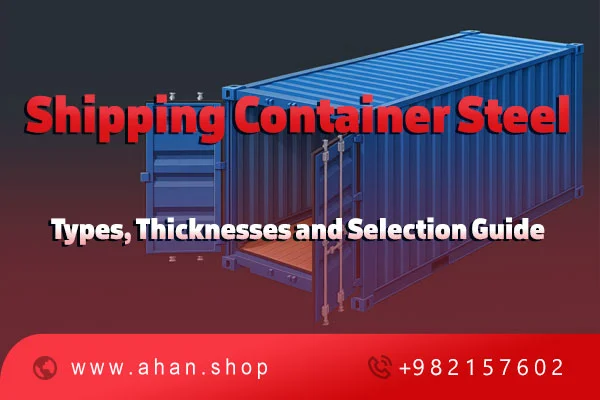
The bodies of standard dry freight shipping containers are commonly fabricated from weathering steel (corten steel), a low-alloy steel with improved resistance to atmospheric corrosion that is often referred to as Corten steel in the container industry. The steel is formed into corrugated panels, and the assembled container body is typically protected with a suitable paint system. However, the materials and thicknesses used throughout a container are not uniform. The roof, side walls, corner posts, understructure, and floor are designed for different structural and functional requirements.
Material selection also depends on the container type and the intended function of each component. Galvanized steel sheets and prepainted steel sheets are used in certain types of containers for exterior cladding, roofing, and wall panels. Stainless steel and aluminum are also used in selected components of refrigerated containers. This article compares materials used in shipping container manufacturing, outlines typical thicknesses for different components, and explains what buyers should consider when sourcing steel for container production.
What Is a Shipping Container?
A shipping container is a durable, reusable cargo transport unit that can also be used for storage. Standard freight containers are engineered for intermodal transportation, allowing them to be transferred between ships, trains, and trucks without unloading and reloading the cargo inside. This simplifies cargo transfers and reduces the need to handle individual packages. Depending on cargo requirements and transportation conditions, containers are manufactured in several configurations, including dry freight containers, refrigerated containers, and specialized container types.
A container's main structural components include the understructure, corner posts, side walls, roof, doors, and flooring. Each component performs a different function, which means that material selection and thickness requirements vary throughout the structure. Selecting the right steel sheets for container manufacturing requires consideration of the component's location, cargo weight, handling and transportation conditions, and exposure to moisture and corrosive environments.
Standard Shipping Container Sizes and Dimensions
Shipping containers are generally classified according to their nominal length in feet. The most common sizes are 20-foot and 40-foot containers, while 45-foot containers are also used for transporting higher-volume cargo. In addition to length, container height is an important consideration. High Cube (HC) containers are approximately 30 cm taller than standard-height containers, providing additional internal cargo space.
The table below shows common external container dimensions in meters:
| Container Type | Length (m) | Width (m) | Height (m) |
|---|---|---|---|
| 20 ft Standard | 6.058 | 2.438 | 2.591 |
| 40 ft Standard | 12.192 | 2.438 | 2.591 |
| 40 ft High Cube | 12.192 | 2.438 | 2.896 |
| 45 ft High Cube | 13.716 | 2.438 | 2.896 |
These are external dimensions; usable internal dimensions are smaller and depend on the wall, floor, and roof construction, as well as any insulation. The 45-foot example represents a standard-width high-cube container; some pallet-wide containers are approximately 2.50 m wide. Dimensions should be confirmed against the applicable manufacturer specification.
How Does Container Type Influence Steel Selection?
A freight container is designed for repeated cargo transportation and must withstand the mechanical stresses associated with loading, unloading, lifting, stacking, and transport. Standard shipping containers must meet specific dimensional, connection, and structural requirements to support intermodal transportation by sea, rail, and road. Consequently, steel selection must account for both the container type and the function of each structural component.
Based on their intended applications, shipping containers can be divided into three broad categories:
- Dry Freight Containers: Used for transporting general cargo, these containers commonly feature corrugated steel walls. Steel selection for the body panels must consider mechanical strength, formability, weldability, and corrosion protection.
- Refrigerated Containers (Reefers): Designed to maintain controlled cargo temperatures, refrigerated containers require insulated walls, suitable interior linings, and refrigeration equipment, in addition to their structural framework. Different materials may be used for the interior and exterior panels.
- Specialized Containers: This category includes tank containers, open-top containers, and flat rack containers, which are designed for specific cargo types and loading requirements. Material selection depends on the cargo's characteristics, weight, dimensions, and the container's structural configuration.
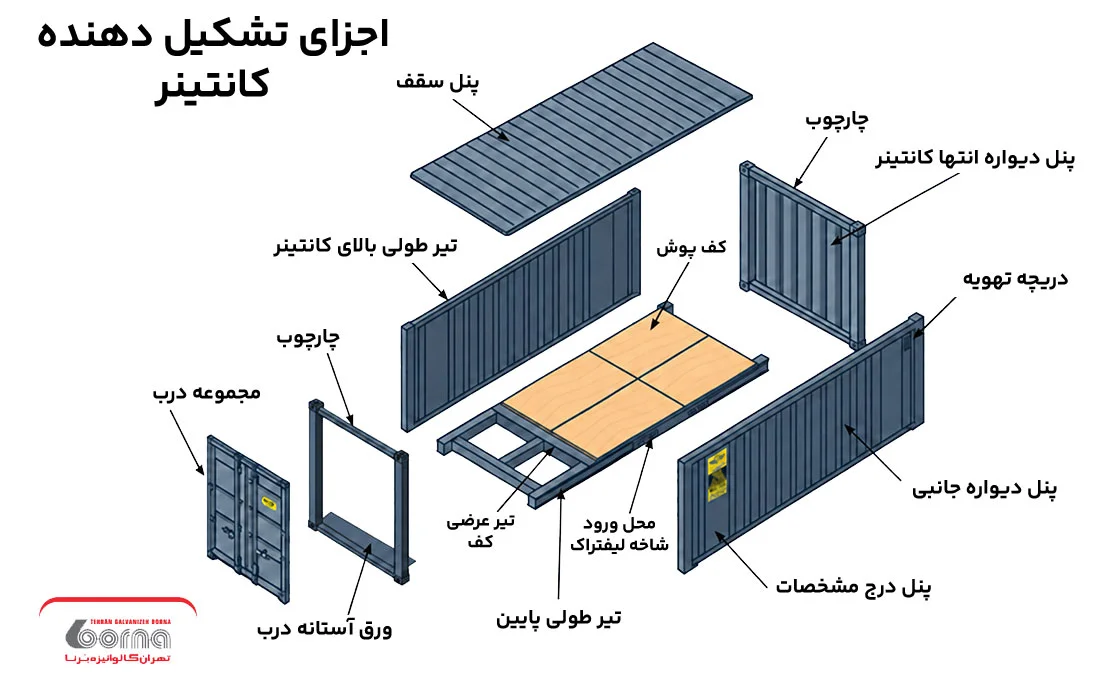
Before specifying the steel grade and sheet thickness for container manufacturing, it is essential to identify the cargo type, transportation conditions, and intended application of each component. Steel sheets used for side walls, roofing, understructure components, and interior panels do not necessarily require the same material properties or thickness specifications.
Weathering Steel (Corten Steel) for Dry Freight Container Bodies
Weathering steel is widely used to manufacture the side walls, front walls, roof panels, and door skins of dry freight containers. It is a family of low-alloy steels designed to provide improved atmospheric corrosion resistance compared with conventional carbon steel under suitable exposure conditions. The term Corten steel is often used in the container industry, although COR-TEN® is a registered trademark rather than a generic steel grade. With appropriate grade selection and fabrication procedures, weathering steel offers the strength, formability, and weldability needed for these components.
Under suitable cycles of wetting and drying, unpainted weathering steel can develop a protective oxide layer (patina) that slows further atmospheric corrosion. However, persistent moisture and salt exposure can interfere with the formation and effectiveness of this protective layer. For this reason, weathering steel used in freight containers is typically protected with a suitable paint coating system to improve the durability of the container body under demanding operating conditions.
Manufacturing Container Walls, Roofs, and Doors with Corten Steel
In container manufacturing, weathering steel sheets are formed into corrugated panels according to the approved design. Corrugation increases the panels' out-of-plane stiffness and contributes to the structural performance of the walls together with the steel framework. The formed panels are welded to one another and to the container's structural rails and corner posts. The assembled body is then prepared for the application of a protective coating system.
Steel sheet thickness varies across different container components. For example, one 20-foot dry freight container specification uses 1.6 mm steel sheets for intermediate side-wall panels and 2.0 mm sheets for side-wall end panels, roof panels, and door skins. These values are design-specific and should not be treated as universal requirements for all containers.
Galvanized Steel for Container Roofs, Walls, and Doors
Galvanized steel sheets are used in certain storage containers and specialized container designs for roofing, exterior wall cladding, and doors. The protective zinc coating helps protect the underlying steel against corrosion, making it particularly relevant for components exposed to rain and moisture. For example, some material storage container specifications call for galvanized steel sheets in the roof, walls, and doors.
When selecting galvanized steel, base steel thickness and zinc coating mass must be considered as separate specifications. The steel grade and thickness should meet the mechanical requirements of the component, while the zinc coating mass contributes to its corrosion resistance and expected service life. Therefore, selecting steel solely on the basis of thickness is not sufficient to ensure the long-term durability of a container body.
Manufacturing Container Walls and Doors with Galvanized Steel
For container designs incorporating corrugated walls, galvanized steel sheets can be processed using roll-forming equipment to produce the required profile, such as trapezoidal corrugations. Properly designed corrugations increase the panels' out-of-plane stiffness. After cutting, the formed panels are assembled onto the container's steel framework according to the fabrication drawings. Container doors may also incorporate flat or profiled galvanized steel sheets as external cladding over the door frame.
During forming and installation, care must be taken to avoid damaging the protective zinc coating. The quality of panel connections, proper sealing of joints, and prevention of water accumulation on roofs and exposed edges also influence long-term corrosion performance. Trapped moisture and surface damage can accelerate corrosion in vulnerable areas.
For standard intermodal freight containers, the use of galvanized steel must be accounted for in the container's technical design and material specifications. The selected steel grade and sheet thickness, together with the structural frame and connection details, must satisfy the requirements for transportation, lifting, and stacking.
Prepainted Steel for Container Cladding and Wall Panels
Prepainted steel sheets are commonly manufactured from galvanized steel or aluminum-zinc alloy-coated steel that has been factory-coated with a primer and protective paint layers. In certain insulated container designs and refrigerated transport bodies, these sheets can be used for exterior cladding and the outer skins of insulated wall panels. For example, some refrigerated transport bodies incorporate prepainted corrugated steel sheets as part of their exterior cladding systems.
A key advantage of prepainted steel in container panel manufacturing is its factory-applied finish and additional protective coating system. The factory-applied finish provides a consistent surface appearance and can reduce the need to paint the panels after assembly. Coating durability depends on the quality of the steel substrate, paint system, coating thickness, and the container's operating conditions.
Manufacturing Container Body Panels with Prepainted Steel
Prepainted steel sheets may be used in flat or profiled form, depending on the container's design. To manufacture corrugated panels, the sheets are passed through roll-forming equipment and subsequently cut to the required dimensions. The formability of the steel and the flexibility of the paint coating must be compatible with the specified panel profile to prevent paint cracking or peeling at bends.
In insulated container bodies, prepainted steel can serve as the outer skin of a wall panel, with an insulating core positioned between the exterior sheet and the interior lining. In this construction, the thickness of the steel sheet is different from the overall wall panel thickness.
When sourcing prepainted steel for container applications, buyers should specify more than the required color. Important considerations include the metallic coating specification, paint system, forming requirements, and resistance to the intended operating environment. Protecting the painted surface during cutting, handling, and installation is also essential to reduce the risk of premature corrosion.
Prepainted steel is not the same as a steel container body that is painted after fabrication. Conventional dry freight containers are typically manufactured from weathering steel and subsequently protected with an appropriate paint coating system.
Hot-Rolled Steel for Container Structural Components
Hot-rolled steel, commonly referred to as black steel in some markets, is steel produced through the hot-rolling process. This designation alone does not define the material's strength or corrosion resistance. Many weathering steel grades are also supplied as hot-rolled products. Therefore, hot-rolled steel and Corten steel are not mutually exclusive material categories; one term describes a manufacturing process, while the other refers to a type of corrosion-resistant steel.
For understructure components, floor cross members, and structural reinforcements, the steel grade specified in the container's engineering drawings must be used. These components may be manufactured from steel plates, sheets, or structural sections, and their thicknesses are not necessarily the same as those of the container body panels. Consequently, a purchase specification such as "4 mm hot-rolled steel" should also identify the required steel grade, dimensions, mechanical properties, and applicable technical specifications.
Stainless Steel and Aluminum for Refrigerated Container Components
In refrigerated containers (reefers), material selection must consider not only mechanical strength but also thermal insulation, cleanability, hygiene, and the maintenance of controlled internal conditions. Some refrigerated container designs use stainless steel for interior wall linings and aluminum for ceiling panels and flooring.
For example, certain refrigerated containers manufactured by CIMC (China International Marine Containers) incorporate stainless steel interior wall linings, aluminum ceiling panels, and floors made from extruded aluminum profiles. Thermal insulation is installed between the interior and exterior panels. The materials and thicknesses of these components vary according to the container model and its technical specifications.
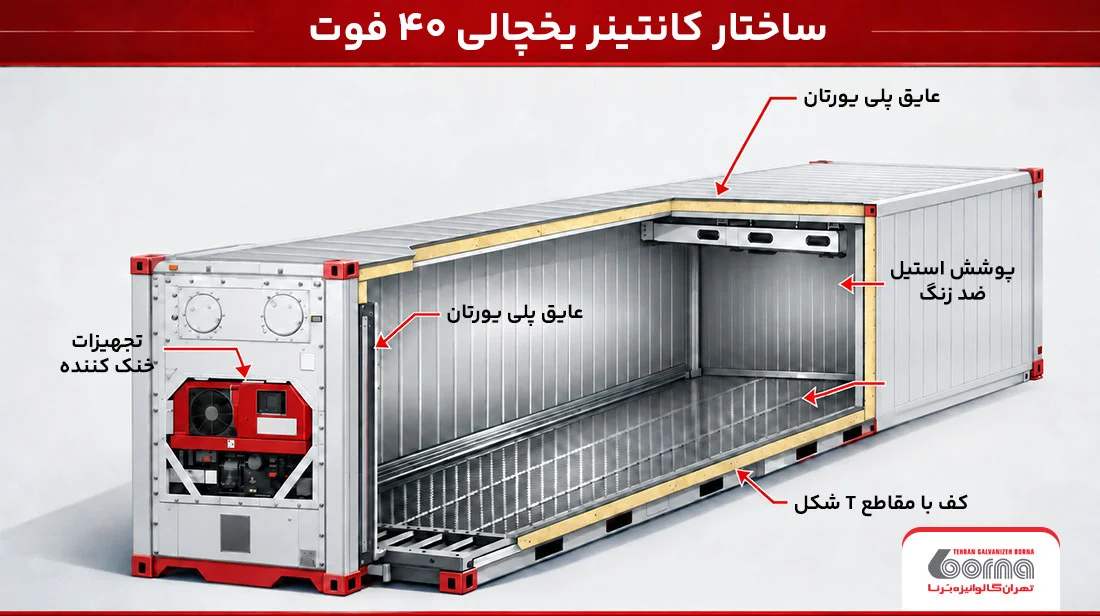
The overall thickness of an insulated wall panel is not the same as the thickness of its metal skins. When specifying a refrigerated container or insulated panel system, buyers should evaluate the inner and outer panel materials, insulation type, and total wall thickness as separate technical requirements.
How Thick Is the Steel Used in Shipping Containers?
The required steel thickness for container manufacturing depends on the component's location, steel grade, profile geometry, and overall structural design. Even within the same side wall, intermediate and end panels may have different thicknesses.
In standard intermodal freight containers, weathering steel sheets and sections may be specified in a range of thicknesses, including 1.5, 2.0, 3.0, and 4.0 mm, depending on the component and design. Some structural members require thicker material. In certain storage containers and non-ISO container structures, galvanized steel sheets with thicknesses such as 1.0, 1.5, 2.0, 2.5, and 3.0 mm may be specified.
These thicknesses are indicative examples rather than universal manufacturing standards. The final material specifications must be determined according to the container's structural requirements, intended use, and approved engineering drawings.
The following table presents an example of steel thicknesses used in the construction of a 20-foot dry freight container:
| Container Component | Thickness in Example Specification (mm) | Component Type |
|---|---|---|
| Side Walls | 1.6 (intermediate panels); 2.0 (end panels) | Corrugated steel sheets |
| Front Wall | 2.0 | Corrugated steel sheets |
| Roof | 2.0 | Formed steel panels |
| Door Skins | 2.0 | Corrugated steel sheets |
| Floor Cross Members | 4.0 | Fabricated steel sections according to engineering drawings |
| Bottom Side Rails | 4.5 | Cold-formed steel sections |
| Front Corner Posts | 6.0 | Pressed steel sections |
Corrugations in the container walls increase panel stiffness, but the container's overall structural performance depends on its wall panels, structural rails, corner posts, and connections working together. Therefore, comparing two steel sheets solely on the basis of thickness is not sufficient to determine whether one can safely replace the other in container construction.
What Materials Are Used for Shipping Container Floors?
Many dry freight containers have floors made from specialized structural plywood supported by steel floor cross members. The plywood forms the cargo loading surface and transfers loads to the supporting steel understructure.
For example, a 20-foot dry freight container may use 28 mm thick plywood flooring. This measurement refers to the floorboard thickness and should not be confused with the thickness of the steel used for the container walls or understructure.
Some container designs also incorporate steel flooring. Where steel sheets or steel tread plates are specified, material selection should consider the cargo weight and load distribution, forklift and other cargo-handling equipment, and the spacing of the supporting floor cross members.
The load-bearing capacity of a container floor depends on the performance of the complete flooring system, including the floor panels, supporting steel members, and their connections, rather than the thickness of the steel sheet alone.
Key Factors in Selecting Steel for Container Manufacturing
Intended Use and Transportation Conditions
Transporting general cargo, storing equipment, providing office space, and carrying temperature-controlled goods involve different material and structural requirements. The first consideration is whether the container is intended for repeated transportation, lifting, and stacking within an intermodal transport network or for stationary use at a designated location.
Mechanical Strength and Fabrication Requirements
The selected steel grade must meet the mechanical requirements of the intended component. Steel sheets used for corrugating, bending, or welding must provide not only adequate strength but also suitable formability and weldability.
Increasing steel thickness without evaluating the overall design can increase the container's tare weight (empty weight) and, where the maximum permissible gross weight remains unchanged, reduce its available payload capacity.
Corrosion Exposure and Protective Coatings
Moisture, salt exposure, prolonged water accumulation, and surface damage can affect the service life of a container body. For painted steel components, the quality of surface preparation and protective coating application is also critical. Material selection should therefore consider both the operating environment and the proposed corrosion protection system.
Joint Integrity and Weathertightness
Even appropriately specified steel sheets may not perform as intended without proper fabrication and assembly. The quality of welds, panel joints, door assemblies, and weather seals must be assessed alongside material specifications to maintain structural integrity and weathertightness. Water ingress or corrosion at joints can compromise the durability and performance of the container body.
Key Standards for Shipping Container Manufacturing
When specifying materials for container manufacturing, it is important to distinguish between steel material standards and container design and performance standards. Material standards define the properties and requirements of steel products, while container standards address aspects such as dimensions, fittings, structural performance, and testing of the completed container.
- JIS G 3125: Specifies superior atmospheric corrosion-resistant rolled steels, including grade SPA-H.
- ASTM A606/A606M: Covers high-strength, low-alloy steel sheet and strip with improved atmospheric corrosion resistance, supplied in hot-rolled or cold-rolled form.
- ISO 668: Defines the classification, external dimensions, and ratings of Series 1 freight containers.
- ISO 1161: Specifies dimensions and functional and strength requirements for corner and intermediate fittings used on Series 1 freight containers.
- ISO 1496-1: Establishes specifications and testing requirements for general-purpose freight containers.
- ISO 1496-2: Covers specifications and testing requirements for thermal containers, including insulated and refrigerated containers.
For freight containers used in international transport, compliance with the International Convention for Safe Containers (CSC) is essential where the Convention applies. The Convention establishes requirements relating to structural safety, testing, safety approval, inspection, and maintenance of applicable freight containers.
Key Considerations When Purchasing Steel for Container Manufacturing
When sourcing steel for container manufacturing, buyers should first identify whether the material will be used for the side walls, roof, doors, understructure, or flooring. Each component has different requirements in terms of steel grade, thickness, mechanical properties, and corrosion protection.
Purchasing steel according to clearly defined technical specifications, while evaluating material quality and supplier capabilities, helps control procurement costs and supports efficient manufacturing operations.
Selecting a Reliable Steel Supplier and Verifying Product Specifications
Before placing an order, buyers should verify the steel manufacturer, steel grade, applicable product standard, and information provided in the mill test certificate (MTC). These details must be consistent with both the project requirements and the materials delivered.
Tehran Galvanizeh Borna specializes in sourcing galvanized steel, prepainted steel, and cold-rolled steel from Iranian and international steel manufacturers.
These products are available in coil and cut-to-length sheet formats, with supply options for different order quantities, subject to product availability and specifications. This flexibility helps manufacturers source steel according to their material requirements, production volumes, and procurement schedules.
Inspecting Surface Quality and Coating Integrity
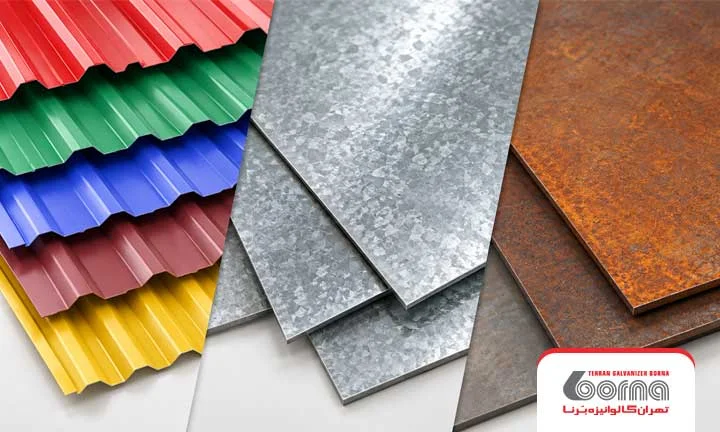
Steel sheets should be inspected upon delivery for cracks, dents, significant corrosion, and transportation or handling damage. For galvanized steel, the integrity of the zinc coating is an important consideration. For prepainted steel, buyers should check for deep scratches, coating cracks, peeling, and other visible paint defects. Where coating adhesion is a critical requirement, it should be verified through suitable testing or the manufacturer's inspection documentation.
Coating damage can create vulnerable areas where corrosion may develop, potentially increasing surface preparation, repair, or replacement costs during manufacturing. Visual inspection should always be supported by verification of the relevant technical specifications and product documentation.
Matching Steel Thickness and Grade to Engineering Drawings
Steel thickness and grade must be selected according to the container's approved engineering drawings and structural calculations. Unnecessarily increasing steel thickness adds material weight and increases steel consumption, while using steel thinner than specified may compromise the performance of the component.
When requesting a quotation, buyers should clearly specify the required thickness, dimensional tolerances, length, width, and order quantity. Tehran Galvanizeh Borna provides product information that allows buyers to evaluate and compare available materials based on specifications such as thickness, width, manufacturer, and coating designation.
Choosing Protective Coatings for Container Operating Conditions
Environmental exposure should be assessed according to the transportation routes, storage locations, and expected duration of exposure to moisture and salt.
For galvanized steel, the zinc coating mass is an important selection criterion. For prepainted steel, buyers should also consider the paint system, coating thickness, and specifications of the underlying metallic coating.
In coastal or highly corrosive industrial environments, the material designation alone is not sufficient to determine suitability. The selected corrosion protection system must be appropriate for the anticipated exposure conditions.
Providing this information when making a sourcing inquiry helps suppliers identify and compare products that meet the intended performance requirements.
Coordinating Cutting, Forming, and Delivery Requirements
Before finalizing an order, buyers should identify any required cutting, slitting, or forming operations.
Tehran Galvanizeh Borna offers sheet cutting to standard and custom dimensions, as well as forming services for galvanized steel sheets, including sinusoidal corrugations and trapezoidal profiles.
For container manufacturing, the panel dimensions, corrugation geometry and depth, and feasibility of the required profile should be confirmed with the supplier before ordering. Proper coordination can help reduce material waste, avoid unnecessary rework, and improve production efficiency.
Buyers should also confirm order preparation times, transportation costs, and delivery locations during the procurement process.
For orders within Iran, Tehran Galvanizeh Borna can arrange nationwide delivery and direct dispatch from manufacturing facilities, subject to product availability and order conditions. The delivery method and schedule should be coordinated according to the material requirements and the customer's production plan.
To source galvanized steel or prepainted steel for container manufacturing, buyers can contact Tehran Galvanizeh Borna with their technical specifications, required quantities, and processing needs.
Our sales team can assist with product selection, availability, quotations, cutting and forming options, and delivery arrangements. For inquiries, contact TG Borna at +98 21 57602.
FAQs
Answers to common questions that may arise for you while reading this article.
برای بدنه کانتینرهای باربری خشک مخصوصا برای حمل و نقل روی دریا ، فولاد مقاوم به خوردگی جوی مانند کورتن رایج است.
برای کانتینر خشک 20 فوت، ضخامت ورق دیواره 1٫6 تا 2 میلی متر و سقف 2 میلی متر است.
بله. ورق گالوانیزه در ساخت کانتینرهای انباری و کانتینرهایی که در حمل با کامیون و قطار استفاده می شود، کاربرد دارد.
ورق رنگی برای پوشش بیرونی بدنه و پوسته پنل ها کاربرد دارد.
بله؛ در کانتینرهای باربری، کورتن همراه با پوشش رنگ محافظ استفاده می شود. این فولاد ضدزنگ نیست و پوشش آن به نگهداری و ترمیم آسیب ها نیاز دارد.
در بسیاری از کانتینرهای خشک، تخته چندلایه مخصوص روی تیرهای فولادی قرار می گیرد. کف فولادی نیز در برخی مدل ها استفاده می شود.
خیر؛ گرید فولاد، شکل قطعات، طراحی شاسی و کیفیت اتصالات نیز مؤثرند. ضخامت باید مطابق محاسبات انتخاب شود تا وزن و هزینه اضافی به کانتینر تحمیل نشود.
نوع ورق، گرید، ضخامت، ابعاد، مقدار و مشخصات پوشش را به کارشناسان آهن شاپ 02157602 اعلام کنید.
How would you rate this article?
Help us provide better content by registering your rating.
Related Articles
-

What Is Galvanizing? Methods and Applications
Learn how galvanizing protects steel, compare hot-dip and cold galvanizing methods, and explore their applications and key coating quality criteria.
60 minutes of study time -

Steel Sheets and Plates for Industrial Sheds
Compare hot-rolled, galvanized and prepainted steel for industrial sheds. Explore sheet thicknesses, roofing and cladding applications, and selection guidelines.
40 minutes of study time -
Choosing the Right Steel Sheets and Plates for Tank Fabrication
Compare carbon steel, galvanized steel and stainless steel for tank fabrication. Explore plate thicknesses, corrosion protection and tank design standards.
20 minutes of study time
Add a comment
Shipping Container Steel: Types, Thicknesses and Selection Guide