


Choosing the Right Steel Sheets and Plates for Tank Fabrication
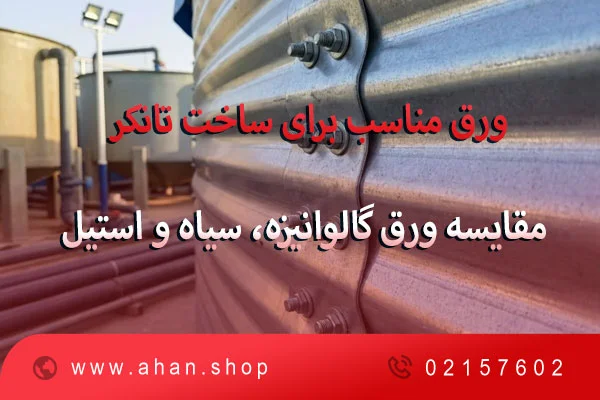
A key question in tank fabrication is: Which steel sheet or plate is best suited to the intended application? Although thicker steel can provide greater structural capacity in some designs, plate thickness alone does not determine a tank's suitability or service life. Selecting the right material requires a broader assessment.
The stored liquid, installation environment, operating conditions, required storage capacity, and project budget all influence material selection for tank fabrication. For example, steel suitable for an agricultural water storage tank may not be appropriate for storing drinking water, fuel, or chemicals.
This article examines the main types of steel sheets and plates used in tank fabrication, their applications, and the technical factors buyers should consider when specifying materials.
What Should You Consider Before Selecting Steel for Tank Fabrication?
Before comparing hot-rolled carbon steel, galvanized steel, and stainless steel, several questions need to be answered.
What will the tank contain? Will it store drinking water, agricultural water, fuel, oil, or chemicals? Will the tank be installed outdoors or indoors? Will it be a fixed storage tank or a tank mounted on a truck or trailer for road transport? What capacity is required, and will the tank operate under internal pressure?
The answers help establish the required corrosion resistance, mechanical strength, impact performance, temperature suitability, and chemical compatibility, as well as the applicable design and fabrication standards.
Hot-Rolled Carbon Steel: A Cost-Effective and Widely Used Option
Hot-rolled carbon steel plate is widely used in the fabrication of atmospheric storage tanks and other industrial tanks when its grade meets the applicable design requirements. Commonly referred to as black steel in some markets, it is produced by hot rolling. Depending on the grade and specification, it can provide a practical balance of strength, weldability, formability, and cost.
Hot-rolled carbon steel plates are commonly considered for applications such as:
- Non-potable water storage tanks
- Agricultural water storage tanks
- Diesel and other petroleum-product storage tanks
- Oil storage tanks
- Industrial storage tanks
- Shells and other components of large stationary storage tanks
One of the main advantages of hot-rolled carbon steel is its relatively low material cost in many tank fabrication projects. Suitable grades can be cut, rolled, formed, and welded using established fabrication methods. These characteristics make it a common choice for manufacturers of general-purpose storage tanks.
However, uncoated carbon steel has an important limitation: it is susceptible to corrosion when exposed to water, moisture, and other corrosive substances. Where corrosion protection is required, exposed tank surfaces should receive a coating or lining system appropriate to the stored liquid and service environment. Epoxy coatings and linings are among the available options, but their suitability must be verified for the intended service conditions. For drinking water applications, any material in contact with the water must also meet the applicable potable water safety requirements.
Galvanized Steel: Corrosion Protection for Water Storage Applications
Galvanized steel is steel protected by a zinc coating that helps reduce corrosion of the underlying metal. This protective layer makes galvanized steel more resistant to atmospheric moisture and rust than uncoated carbon steel. Galvanized steel is therefore used in certain water storage tank systems, particularly where external exposure to moisture is a concern and the zinc coating is compatible with the stored water.
Depending on the tank design, product specification, and water quality requirements, applications may include:
- Building water storage tanks
- Agricultural water storage tanks
- Fire protection water storage tanks
- Water storage tanks for workshops and industrial facilities
- Bolted galvanized steel tanks
A key advantage of galvanized steel is the additional corrosion protection provided by its zinc coating compared with uncoated carbon steel. In suitable environments, this may reduce the need for additional external painting and help lower maintenance requirements.
However, the fabrication method and coating integrity are important considerations. Cutting or welding galvanized steel can damage or remove the zinc coating at cut edges and in heat-affected areas. If these areas are not properly treated, localized corrosion may develop. The required repair or corrosion protection method depends on the galvanized product, tank construction method, and service conditions.
Therefore, the durability of a galvanized steel tank depends not only on the quality of the steel sheet but also on tank design, fabrication quality, joint protection, and the compatibility of the zinc coating with the stored water.
How Does Zinc Coating Thickness Affect Tank Service Life?
One of the key considerations when selecting galvanized steel is its zinc coating mass and thickness. These properties influence the amount of zinc available to protect the underlying steel against corrosion.
Under EN 10346, zinc coating designations include Z100, Z140, Z180, Z200, Z275, and Z350, as well as heavier coating classes. In general, a higher zinc coating mass corresponds to a thicker protective zinc layer. For example, the Z275 designation specifies a minimum total zinc coating mass of 275 g/m² across both surfaces of the steel sheet, as determined by the three-spot test. It does not indicate the steel substrate thickness or a coating mass of 275 g/m² on each side.
For a given zinc coating system, a greater coating mass can provide a larger reserve of zinc for corrosion protection. However, the actual corrosion performance and service life also depend on exposure conditions, water chemistry, temperature, coating damage, and tank maintenance. A heavier zinc coating does not automatically make galvanized steel suitable for every stored liquid or operating environment.
Consequently, when selecting galvanized steel sheets for tank fabrication, buyers should evaluate more than the thickness of the steel substrate. The zinc coating designation, material grade, intended service environment, and compatibility with the stored liquid are also essential engineering considerations.
Stainless Steel: A Suitable Choice for Hygienic Applications
For tanks used to store drinking water, milk, liquid food products, beverages, or certain chemicals, stainless steel sheets and plates are often appropriate. Stainless steel grades 304 and 316 are widely used in tank fabrication. Grade 304 is widely used in food-processing and water-storage applications, while grade 316 generally offers better resistance to chloride-induced pitting and certain other forms of corrosion. Actual suitability depends on the liquid composition, temperature, and cleaning conditions.
The main advantages of stainless steel include:
- Good corrosion resistance in compatible service environments
- Ease of cleaning and sanitizing when properly finished and fabricated
- Smooth surfaces that can support hygienic design
- Long service life under appropriate operating and maintenance conditions
- No routine need for conventional anti-rust paint on appropriately specified stainless steel surfaces
However, stainless steel generally has a higher initial material cost than hot-rolled carbon steel or galvanized steel. Welding stainless steel requires appropriate procedures and skilled personnel to minimize distortion, surface contamination, and the risk of localized corrosion. Depending on the application, weld finishing, heat-tint removal, and appropriate surface treatment may be necessary to maintain corrosion resistance and meet hygienic design requirements.
For potable water storage tanks, the general descriptions "stainless steel" or "galvanized steel" are not sufficient to establish suitability. All water-contact materials and components, including steel surfaces, coatings, linings, sealants, and joint materials, must meet the applicable drinking water safety requirements. NSF/ANSI/CAN 61 is a recognized standard for evaluating the potential health effects of materials, products, and components in contact with drinking water. Compliance with or certification to this standard may be required by local regulations or project specifications.
Which Steel Is Used for Fuel Storage Tanks?
Carbon steel plates of an appropriate grade and thickness are widely used in the construction of diesel storage tanks, gasoline storage tanks, and tanks for other petroleum products. For these applications, structural integrity, weld quality, leak-tightness, corrosion protection, and compliance with applicable safety requirements are essential considerations.
When a tank is mounted on a truck or trailer, its shell and support system must withstand more than the static load of the liquid. The design must also account for vehicle vibration, impact loads, dynamic forces, and liquid movement during transportation. Therefore, steel grade, plate thickness, tank geometry, internal reinforcement, and support arrangements should be determined by qualified designers and manufacturers in accordance with the applicable transport tank requirements.
For pressure vessels and specialized tank applications, general-purpose hot-rolled carbon steel may not meet the required material specifications. Depending on the design code and service conditions, pressure-vessel-quality steel plates, such as suitable grades covered by ASTM A516/A516M, may be specified. However, the material standard alone does not establish compliance with pressure vessel design, fabrication, inspection, or testing requirements.
How Thick Should Steel Plates Be for Tank Fabrication?
One of the most common questions when purchasing steel sheets and plates for tank fabrication is: What plate thickness is required for a given tank capacity?
Buyers may encounter rules of thumb such as "2 mm steel is sufficient for a 1,000-liter tank" or "a 10,000-liter tank requires 4 mm steel." However, from an engineering perspective, tank capacity alone cannot determine the required plate thickness.
Preliminary material estimates sometimes refer to indicative thickness ranges drawn from previous fabrication experience. These figures must not be treated as verified design values. Final plate thicknesses must be established according to the tank dimensions, shell geometry, stored liquid density, operating conditions, support configuration, design loads, corrosion allowance, and applicable construction standards.
The following table lists unverified, illustrative thickness ranges for preliminary discussions of welded steel tanks intended for atmospheric-pressure service. The source and applicability of these values have not been established; they are not engineering recommendations and must not be used to specify or fabricate a tank. They do not apply to pressure vessels or tanks designed to transport hazardous materials.
| Approximate Tank Capacity | Illustrative Shell Thickness (mm) | Illustrative Bottom Plate Thickness (mm) | Materials to Evaluate | Potential Applications |
|---|---|---|---|---|
| 500–1,000 L | 1.5–2.0 | 2.0 | Galvanized steel / Carbon steel | Small-capacity storage tanks |
| 1,000–2,000 L | 2.0–2.5 | 2.5–3.0 | Galvanized steel / Carbon steel | Water storage and general-purpose applications |
| 2,000–5,000 L | 2.5–3.0 | 3.0–4.0 | Carbon steel / Galvanized steel | Medium-capacity storage tanks |
| 5,000–10,000 L | 3.0–4.0 | 4.0–5.0 | Carbon steel | Small industrial storage tanks |
| 10,000–20,000 L | 4.0–5.0 | 5.0–6.0 | Carbon steel | Industrial storage tanks |
| 20,000–50,000 L | 5.0–6.0 | 6.0–8.0 | Carbon steel | Industrial storage tanks |
| 50,000–100,000 L | 6.0–8.0 | 8.0–10.0 | Specified tank plate grades / Carbon steel | Large storage tanks |
Important: These figures are unverified examples only and must not be treated as a code-based tank design, material specification, or purchasing recommendation. Two tanks with the same storage capacity may require substantially different shell and bottom plate thicknesses because of differences in diameter, height, geometry, support conditions, liquid specific gravity, corrosion allowance, and design loads.
Where a recognized tank construction code applies, the design must satisfy its requirements for minimum plate thickness, structural integrity, fabrication, inspection, and testing. For example, API 650 establishes requirements for certain welded, aboveground, atmospheric-pressure storage tanks, while applicable pressure vessel codes govern pressure equipment. A qualified engineer must determine the required thicknesses for the specific tank configuration before material procurement or fabrication.
Minimum Steel Plate Thickness for Large Industrial Storage Tanks Under EN 14015
For large industrial storage tanks, general market-based thickness recommendations are not a reliable basis for engineering design. Plate thickness must be determined in accordance with the applicable tank construction standard.
For example, EN 14015:2004 specifies minimum nominal shell plate thicknesses by tank diameter for site-built, vertical, cylindrical, flat-bottomed, aboveground welded steel storage tanks within its defined scope. These minimums address fabrication and erection requirements. Where design calculations call for greater thickness, the calculated value governs.
The following table shows the minimum specified nominal shell plate thicknesses for carbon and carbon-manganese steel tanks in Table 16 of EN 14015:2004.
| Tank Diameter (D) | Minimum Nominal Shell Plate Thickness (Carbon Steel) |
|---|---|
| D < 4 m | 5 mm |
| 4 m ≤ D < 10 m | 5 mm |
| 10 m ≤ D < 15 m | 5 mm |
| 15 m ≤ D < 30 m | 6 mm |
| 30 m ≤ D < 45 m | 8 mm |
| 45 m ≤ D < 60 m | 8 mm |
| 60 m ≤ D < 90 m | 10 mm |
| D ≥ 90 m | 12 mm |
Important: These values do not mean that a tank with a diameter of 10 meters can always be constructed using 5 mm shell plates. The specified plate thickness must satisfy the minimum construction requirements as well as the applicable design calculations.
Depending on the tank design and operating conditions, the required shell plate thickness is influenced by factors including:
- Tank diameter
- Design liquid height
- Stored liquid density
- Allowable material stress
- Internal design pressure
- Hydrostatic testing conditions
- Corrosion allowance
The thicknesses in the table are therefore minimum nominal construction requirements for the specified tank category, not final design thicknesses. The plates selected for an actual tank may need to be substantially thicker.
Why Can Tank Bottom Plates Require a Different Thickness from Shell Plates?
The tank bottom operates under conditions that differ from those affecting the cylindrical shell. Depending on the tank design, foundation support, and service environment, the bottom may be influenced by:
- Hydrostatic loading from the stored liquid
- Foundation settlement and uneven support
- Internal corrosion
- External or underside corrosion
- Localized stresses at the shell-to-bottom junction
Consequently, the required bottom plate thickness may differ from the shell plate thickness. In a properly supported flat-bottomed tank, much of the liquid load is transferred through the bottom to the foundation. The bottom plate thickness must nevertheless meet the applicable requirements for fabrication, corrosion allowance, localized stresses, and other design conditions.
Under EN 14015:2004, the minimum nominal thickness for carbon and carbon-manganese steel bottom plates is 6 mm for lap-welded bottoms and 5 mm for butt-welded bottoms, excluding any additional corrosion allowance.
These minimum values relate to the specified bottom joint configurations. Annular bottom plates, where required, are subject to additional design provisions and may require different thicknesses.
This illustrates why shell plates and bottom plates must be specified separately in large industrial storage tank projects. The tank bottom is not necessarily thicker than every shell course; the required thickness depends on the applicable design and fabrication requirements.
How Is Steel Plate Thickness Calculated for Tank Construction?
In cylindrical tank design, plate thickness is determined from the applicable loads, material properties, geometry, and design criteria rather than fabrication experience alone.
For an idealized thin-walled cylindrical vessel subjected to uniform internal pressure, the circumferential stress, also known as hoop stress, can be approximated as follows:
σ = PD / (2t)
Where:
- σ = Hoop stress
- P = Internal pressure
- D = Cylinder diameter
- t = Shell wall thickness
This relationship indicates that, at a given internal pressure and allowable stress, a larger cylinder diameter generally requires a thicker wall.
However, this equation is based on thin-wall assumptions and uniform internal pressure. It is not a complete tank design formula and must not be used alone to determine the required plate thickness for a storage tank or pressure vessel.
For atmospheric and low-pressure liquid storage tanks, the pressure exerted by the stored liquid increases with depth. Hydrostatic pressure at depth can be expressed as P = ρgh, where ρ is liquid density, g is gravitational acceleration, and h is the depth below the liquid surface.
In practice, tank design must also account for relevant factors such as hydrostatic pressure, wind loads, seismic loads, shell stability, internal pressure or vacuum, corrosion allowance, and other applicable design loads.
Accordingly, standards such as API 650 and EN 14015 are used for storage tanks that fall within their respective scopes. These standards establish minimum construction requirements and engineering methods for determining shell plate thickness under defined design and operating conditions.
Conclusion
Choosing the right steel sheets and plates for tank fabrication depends primarily on the intended application, stored liquid, operating conditions, and applicable design requirements.
For non-potable water storage and cost-sensitive projects, carbon steel with a compatible protective coating or lining may be a practical choice. For certain water storage applications in humid environments, galvanized steel may offer improved corrosion protection, provided the zinc coating is compatible with the stored water and tank design.
For potable water and food-processing applications, appropriately specified stainless steel is often selected for its corrosion resistance, cleanability, and suitability for hygienic fabrication. However, all materials and components in contact with drinking water must meet the applicable health and safety requirements.
For fuel storage, chemical storage, transport tanks, and pressure vessels, material selection must be based on the stored substance, operating conditions, applicable construction codes, and engineering design.
For related steel procurement needs, buyers can explore Ahan Shop's range of:
- Galvanized Steel Coils and Sheets
- Prepainted Steel Coils and Sheets
- Cold-Rolled Steel Coils and Sheets
Tehran Galvanize Borna, specializes in the sourcing and distribution of steel products from Iranian and international manufacturers. Buyers can contact the sales team to discuss material specifications, product availability, order quantities, and supply options.
Before placing an order for a tank fabrication project, the selected material should be checked against the approved engineering specifications, corrosion protection requirements, and applicable construction standards. Products intended for general sheet-metal applications must not be assumed suitable for tank shell or bottom fabrication without checking the required grade and design specifications.
FAQs
Answers to common questions that may arise for you while reading this article.
برای آب غیرآشامیدنی، گالوانیزه از ورق سیاه بدون پوشش مقاوم تر است. ورق سیاه به پوشش ضدخوردگی نیاز دارد.
خیر. ابعاد، شکل مخزن، نوع مایع و فشار کاری نیز باید بررسی شوند.
جوشکاری به پوشش روی آسیب می زند؛ محل آسیب دیده باید با پوشش مناسب ترمیم شود.
نوع مایع، ظرفیت، ابعاد و فشار کاری تانکر، همراه با ضخامت و گرید ورق تعیین شده در نقشه ساخت.
How would you rate this article?
Help us provide better content by registering your rating.
Related Articles
-

What Is Galvanizing? Methods and Applications
Learn how galvanizing protects steel, compare hot-dip and cold galvanizing methods, and explore their applications and key coating quality criteria.
60 minutes of study time -
Shipping Container Steel: Types, Thicknesses and Selection Guide
Which steel is best for shipping containers? Compare Corten, galvanized, and prepainted steel, with a thickness guide for container walls and roofs.
40 minutes of study time -

Steel Sheets and Plates for Industrial Sheds
Compare hot-rolled, galvanized and prepainted steel for industrial sheds. Explore sheet thicknesses, roofing and cladding applications, and selection guidelines.
40 minutes of study time
Comments Users
- حسینیان
جول راهنمای مقاله بسیار کاربردی و خوب بود. کارشناسان فروش خیلی خوب راهنمایی کردند. با تشکر
Add a comment
Choosing the Right Steel Sheets and Plates for Tank Fabrication