


What Is ASTM A653/A653M? Hot-Dip Galvanized Steel Guide
ASTM A653/A653M is a widely used product specification for hot-dip galvanized and galvannealed steel sheets. Many galvanized steel products used in construction, automotive manufacturing, household appliances, ductwork, heating, ventilation and air conditioning (HVAC) equipment, electrical enclosures, and light steel structures may be manufactured and supplied in accordance with this standard.
However, specifying that a product "complies with ASTM A653/A653M" is not sufficient to fully define its technical characteristics. A complete material specification should also identify the steel designation and grade, coating type, coating weight or mass designation, nominal thickness, dimensions, surface finish, and any required surface treatments.
This article explains what ASTM A653/A653M is, which products it covers, what the G90 and Z275 coating designations mean, how galvanized steel differs from galvannealed steel, and which specifications buyers should consider when purchasing steel sheets manufactured to this standard.
What Is ASTM A653/A653M?
The official title of this ASTM standard is:
Standard Specification for Steel Sheet, Zinc-Coated (Galvanized) or Zinc-Iron Alloy-Coated (Galvannealed) by the Hot-Dip Process
In technical terms, the standard specifies requirements for steel sheet coated with zinc or a zinc-iron alloy through the hot-dip coating process.
ASTM A653/A653M covers two principal types of coated steel sheet:
- Hot-Dip Galvanized Steel: Steel sheet coated primarily with zinc to provide corrosion protection.
- Hot-Dip Galvannealed Steel: Steel sheet with a zinc-iron alloy coating produced through an additional alloying treatment after hot-dip coating.
Both product types are supplied in two main forms:
- Coils: Continuous lengths of coated steel sheet wound into coils.
- Cut Lengths: Coated steel sheets cut to specified lengths.
What Is the Difference Between ASTM A653 and ASTM A653M?
The letter M in ASTM designations generally indicates the use of SI (metric) units. ASTM A653/A653M accommodates orders specified in two measurement systems:
- ASTM A653: Uses inch-pound units.
- ASTM A653M: Uses SI (metric) units.
For example, coating weight in the inch-pound system is expressed in ounces per square foot (oz/ft²), while coating mass in the SI system is expressed in grams per square meter (g/m²). For steel sheet coating designations, these values generally refer to the total coating on both sides, unless otherwise specified.
An important distinction is that the values specified in the inch-pound and SI systems are not necessarily exact equivalents. Each system must be applied independently. Buyers should therefore avoid combining requirements from ASTM A653 and ASTM A653M within the same material specification without establishing the applicable measurement system.
Scope of ASTM A653/A653M
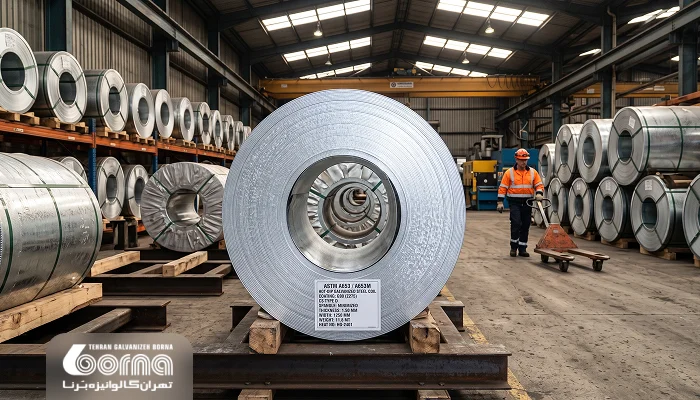
ASTM A653/A653M applies to steel sheet products that:
- Have a carbon steel or low-alloy steel substrate, depending on the specified steel designation and grade;
- Are manufactured using a continuous hot-dip coating process;
- Have a protective coating consisting primarily of zinc;
- Or have a zinc-iron alloy coating produced through the galvannealing process;
- Are supplied in coils or cut lengths;
- Are intended for applications such as forming, stamping, bending, or structural use, depending on the steel grade.
The standard covers several steel designations developed for different manufacturing and performance requirements, including Commercial Steel (CS), Forming Steel (FS), Deep Drawing Steel (DDS), Extra Deep Drawing Steel (EDDS), Structural Steel (SS), High-Strength Low-Alloy Steel (HSLAS), High-Strength Low-Alloy Steel with Improved Formability (HSLAS-F), Solution Hardened Steel (SHS), and Bake Hardenable Steel (BHS).
These designations differ in their chemical composition, specified mechanical properties, formability, and intended applications. Selecting a product under ASTM A653/A653M therefore requires identifying the appropriate steel designation, grade, and class where applicable.
ASTM A653/A653M does not cover every type of metallic-coated steel sheet. For example, 55% aluminum-zinc alloy-coated steel is addressed by ASTM A792/A792M, while certain zinc-aluminum-magnesium alloy-coated steel sheets are covered by ASTM A1046/A1046M. Buyers should verify the applicable product standard rather than assuming that all metallic-coated steel sheets fall within the scope of ASTM A653/A653M.
How Is Continuous Hot-Dip Galvanized Steel Produced?
In the continuous hot-dip galvanizing process, a steel strip passes through a series of cleaning and surface preparation stages before entering a molten zinc bath. After coating, the amount of zinc retained on the strip is controlled using high-velocity air knives, which remove excess molten zinc and help achieve the specified coating mass and coating uniformity.
The main stages of a typical continuous hot-dip galvanizing line include:
- Uncoiling: Feeding steel strip from coils into the production line.
- Cleaning and Degreasing: Removing oils, contaminants, and surface residues.
- Annealing and Heat Treatment: Conditioning the steel strip to achieve the required material properties and prepare the surface for coating.
- Hot-Dip Coating: Passing the steel strip through a molten zinc bath.
- Coating Mass Control: Using air knives to regulate the amount of zinc coating on the strip.
- Controlled Cooling: Cooling the coated strip under controlled conditions.
- Skin-Pass Rolling or Surface Texture Control: Applying finishing operations where required to achieve the specified surface characteristics.
- Surface Treatment: Applying oil, chemical passivation, or other specified post-treatments where required.
- Quality Inspection and Recoiling: Inspecting the finished sheet and recoiling it for storage, further processing, or shipment.
The zinc coating protects the underlying steel through two complementary mechanisms. First, it acts as a physical barrier between the steel substrate and the surrounding environment. Second, zinc provides sacrificial (cathodic) protection, helping protect exposed steel in certain conditions because zinc corrodes preferentially to steel.
For a given zinc coating system and comparable atmospheric exposure conditions, a greater zinc coating mass generally provides more zinc available for sacrificial protection and can extend the period of corrosion protection. However, actual coating performance also depends on environmental corrosivity, moisture exposure, surface condition, and service requirements.
ASTM A90/A90M specifies a test method for determining the coating weight or mass of zinc and zinc-alloy coatings on iron and steel products. The results can be used to assess conformity with the coating mass requirements of the applicable product specification, including ASTM A653/A653M.
Related Article: What Is Hot-Dip Galvanized Steel?
Types of Coatings Covered by ASTM A653/A653M
ASTM A653/A653M covers two main types of metallic coatings.
1. Zinc Coating (Galvanized Steel)
In hot-dip galvanized steel, the steel substrate is coated primarily with zinc. The zinc coating generally offers good formability and can withstand various fabrication operations, including bending, roll forming, and drawing, provided that the steel grade, coating specification, and forming conditions are suitable.
Galvanized steel sheets are widely used in applications such as:
- Roofing and wall cladding sheets;
- HVAC ductwork;
- Equipment housings and enclosures;
- Electrical cabinets and enclosures;
- Household appliances;
- Automotive components;
- Light-gauge steel profiles;
- Stamped and formed components.
2. Zinc-Iron Alloy Coating (Galvannealed Steel)
In the production of galvannealed steel, the steel strip undergoes an additional heat treatment after leaving the molten zinc bath. During this process, iron from the steel substrate diffuses into the zinc coating, forming a zinc-iron alloy coating.
Galvannealed steel typically has a more matte, gray surface appearance than conventional galvanized steel. It is often selected for applications requiring good paintability and paint adhesion, provided that the appropriate surface preparation and paint system are used.
The zinc-iron alloy coating is generally harder and more brittle than a conventional zinc coating. Consequently, for demanding forming operations, factors such as bend radius, sheet thickness, steel substrate properties, and the risk of coating powdering must be carefully evaluated.
Understanding G, Z, A, and ZF Coating Designations in ASTM A653/A653M
An important part of ASTM A653/A653M is its system for specifying metallic coating weight or mass.
G Designations for Galvanized Steel
The letter G identifies a zinc coating designation in the inch-pound system. The number following G represents the specified minimum average coating weight, expressed in ounces per square foot (oz/ft²), for the combined coating on both surfaces, as determined by the Triple-Spot Test (TST).
For example:
G90 = Minimum 0.90 oz/ft² Total Coating Weight on Both Sides (Triple-Spot Average)
Therefore, G90 does not mean that each side of the sheet has a coating weight of 0.90 oz/ft². The designation refers to the combined coating weight on both surfaces, subject to the specified test requirements.
The general requirements standard ASTM A924/A924M also states that, except for differentially coated steel sheet, metallic coating weight or mass is expressed as the total coating on both surfaces.
Z Designations in the SI System
In the SI (metric) system, galvanized steel coating designations use the letter Z, followed by the specified minimum coating mass in grams per square meter (g/m²).
For example:
Z275 = Minimum 275 g/m² Total Zinc Coating Mass on Both Sides (Triple-Spot Average)
G90 and Z275 represent closely corresponding zinc coating levels. However, the inch-pound and SI requirements are specified independently under ASTM A653/A653M. Buyers should use the coating designation and measurement system specified in the purchase order rather than treating the two designations as automatically interchangeable in every contractual or testing context.
A and ZF Designations for Galvannealed Steel
For zinc-iron alloy-coated steel (galvannealed steel), the standard uses the following coating designation prefixes:
- A: Zinc-iron alloy coating designations in the inch-pound system;
- ZF: Zinc-iron alloy coating designations in the SI system.
For example, A40 closely corresponds to ZF120. Under the ASTM coating designation system, A40 specifies a minimum total coating weight of 0.40 oz/ft², while ZF120 specifies a minimum total coating mass of 120 g/m². Both values apply to the combined coating on both sides of the sheet, based on the triple-spot test average.
Comparison of Common Galvanized Steel Coating Designations
The following table provides an approximate comparison of several common zinc coating designations under ASTM A653/A653M:
| Inch-Pound Designation | Closest SI Designation | Total Coating Mass (Both Sides) | Approximate Coating Thickness per Side (Equal Distribution) | Relative Coating Mass (Compared with Z90) |
|---|---|---|---|---|
| G30 | Z90 | Approximately 90 g/m² | Approximately 6 µm | 1.0× |
| G40 | Z120 | Approximately 120 g/m² | Approximately 8–9 µm | 1.3× |
| G60 | Z180 | Approximately 180 g/m² | Approximately 13 µm | 2.0× |
| G90 | Z275 | Approximately 275 g/m² | Approximately 19–20 µm | 3.1× |
Note: The coating thickness values in this table are theoretical approximations, calculated from the specified total zinc coating mass by assuming equal distribution between the two surfaces and using the approximate density of zinc. The relative coating mass values compare the specified minimum SI coating masses with Z90 and are not official ASTM coating classifications.
The coating designations specify minimum total coating weight or mass requirements based on the triple-spot test average. They do not guarantee that the coating is distributed equally between the two sides. The standard also establishes applicable single-spot test requirements and minimum one-side requirements for certain full-width sheet tests. Actual measured coating thicknesses may therefore differ from the approximate values shown.
Furthermore, corrosion resistance is not determined by coating designation alone. Environmental exposure, humidity, industrial pollutants, chlorides, chemical contact, component design, water accumulation, cut edges, and the presence of additional paint coatings can all influence the product's corrosion performance and service life.
Is G90 a Separate ASTM Standard?
No. G90 is not an independent standard. It is a zinc coating designation specified under ASTM A653/A653M.
A more complete product designation for purchasing purposes might be:
ASTM A653/A653M, CS Type B, G90
This example identifies the applicable product specification, the Commercial Steel (CS) Type B designation, and the required G90 zinc coating designation in the inch-pound system.
However, referring to a product simply as "G90 steel sheet" provides information about its zinc coating requirement, not a complete definition of the steel substrate, mechanical properties, formability, thickness, dimensional tolerances, or surface treatments.
For a complete purchase specification, buyers should also state the nominal thickness, width, length or coil requirements, surface condition, finishing requirements, and applicable measurement system. Where available or required, these specifications should be checked against the manufacturer's material test certificate or inspection documentation.
Steel Substrate Designations Under ASTM A653/A653M
The selection of the appropriate steel substrate designation and grade depends on the intended fabrication process and the required mechanical properties of the finished component.
Commercial Steel (CS)
Commercial Steel (CS) is generally intended for applications requiring relatively simple forming operations. Under ASTM A653/A653M, this designation is available in three types:
- CS Type A
- CS Type B
- CS Type C
The differences between these types primarily relate to chemical composition limits and steelmaking practices, which can influence the material's processing characteristics. Selection should take into account the intended fabrication operations, welding requirements, bending conditions, and purchaser specifications.
Forming Steel (FS)
Forming Steel (FS) is intended for applications requiring better formability than typical commercial steel products. It is commonly selected for components involving bending, moderate forming operations, and the production of formed steel parts.
The appropriate forming steel type should be selected according to the required forming severity, material properties, and fabrication process.
Deep Drawing Steel (DDS)
Deep Drawing Steel (DDS) is intended for manufacturing components that undergo deep drawing operations, in which a flat steel sheet is formed into a three-dimensional shape through plastic deformation.
Careful control of the chemical composition, microstructure, and mechanical properties is important for achieving consistent drawing performance and reducing the risk of forming defects.
Extra Deep Drawing Steel (EDDS)
Extra Deep Drawing Steel (EDDS) is designed for more demanding drawing and forming operations requiring a high degree of ductility and formability.
This designation is suitable for components with complex geometries or significant forming requirements, where minimizing the risk of tearing, cracking, and excessive localized thinning is particularly important.
Structural Steel (SS)
Structural Steel (SS) is supplied with specified mechanical property requirements and is used in applications where properties such as minimum yield strength, tensile strength, and elongation are important for structural performance.
For example, structural steel grades may be designated as:
- SS Grade 33 in the inch-pound system;
- SS Grade 230 in the SI system.
The grade number corresponds to the specified minimum yield strength level, expressed in ksi for inch-pound designations and MPa for SI designations.
For example, Grade 33 indicates a minimum yield strength level of 33 ksi, while Grade 230 indicates 230 MPa. Although these grades represent closely corresponding strength levels, the applicable measurement system and complete specification requirements must be observed.
Structural steel grades should be selected according to the engineering design requirements, required mechanical properties, and intended forming operations.
High-Strength Low-Alloy Steel (HSLAS)
High-Strength Low-Alloy Steel (HSLAS) offers higher strength levels than many conventional low-carbon steel grades. Its higher strength can allow engineers to reduce material thickness or component weight while meeting structural requirements, provided that stiffness, stability, formability, and other design constraints are satisfied.
HSLAS products are used in applications such as structural components, automotive parts, industrial equipment, and light-gauge steel sections, where a combination of higher strength and efficient material utilization is important.
High-Strength Low-Alloy Steel with Improved Formability (HSLAS-F)
High-Strength Low-Alloy Steel with Improved Formability (HSLAS-F) is developed to combine high mechanical strength with enhanced forming characteristics.
This designation can be beneficial for components that must meet structural strength requirements while also undergoing bending, stamping, or other forming operations.
The appropriate grade should be selected according to the required strength level, forming severity, component geometry, and manufacturing conditions.
Solution Hardened Steel (SHS) and Bake Hardenable Steel (BHS)
ASTM A653/A653M also includes Solution Hardened Steel (SHS) and Bake Hardenable Steel (BHS), which are used in applications requiring specific combinations of strength and formability.
In Solution Hardened Steel, strengthening is achieved through the action of alloying elements dissolved in the steel matrix.
Bake Hardenable Steel is designed to develop an additional increase in yield strength during a subsequent paint-baking heat cycle, typically after the component has been formed. This characteristic makes it suitable for certain automotive body panels and other formed components requiring good initial formability and improved strength after paint curing.
Chemical Composition Requirements
The chemical composition of the steel substrate influences several important material characteristics, including:
- Weldability;
- Formability;
- Mechanical strength;
- Deep drawing performance;
- Coating behavior and quality;
- Surface quality after processing.
Depending on the steel designation and grade, the chemical composition requirements may specify limits for elements such as carbon, manganese, phosphorus, sulfur, aluminum, and selected microalloying elements.
ASTM A924/A924M establishes general requirements for continuously hot-dip metallic-coated steel sheet, including provisions relating to heat analysis, product analysis, and coating analysis, as applicable.
The results must be evaluated against the chemical composition requirements of the relevant product specification, including ASTM A653/A653M, and the requirements associated with the ordered steel designation and grade.
Mechanical Property Requirements
The required mechanical properties vary according to the steel designation and grade. For structural and high-strength steel products, important properties may include:
- Yield Strength: The stress level associated with the onset of plastic deformation.
- Tensile Strength: The maximum engineering stress reached during a tensile test.
- Elongation: A measure of ductility determined from the percentage increase in gauge length during tensile testing.
- Bend Performance: The material's ability to withstand specified bending conditions without unacceptable defects.
- Hardness: Where hardness testing is required by the applicable specification or agreed purchasing requirements.
ASTM A370, titled Standard Test Methods and Definitions for Mechanical Testing of Steel Products, provides standardized procedures for evaluating the mechanical properties of steel products.
The standard describes testing methods including tensile testing, bend testing, hardness testing, and impact testing. However, the inclusion of a test method in ASTM A370 does not mean that every test is mandatory for every product manufactured under ASTM A653/A653M.
The applicable product specification determines which mechanical properties and tests are required for a particular steel designation and grade.
Consequently, the mechanical properties of galvanized steel sheet must be evaluated against the requirements of the ordered steel grade, rather than against a single set of general mechanical values for all ASTM A653/A653M products.
Coating Weight and Mass Measurement Methods
Coating weight or mass is a principal acceptance criterion for hot-dip galvanized steel sheets. Under the general requirements of ASTM A924/A924M, coating weight or mass may be evaluated using two principal methods:
- Weigh-Strip-Weigh Method: The specimen is weighed, the metallic coating is chemically removed, and the remaining steel substrate is weighed again to determine the coating weight or mass.
- X-Ray Fluorescence (XRF) Method: The coating is measured using X-ray fluorescence instrumentation, with appropriate calibration and standardized measurement procedures.
ASTM A90/A90M provides a standardized method for determining the coating weight or mass of zinc and zinc-alloy coatings on iron and steel products using a coating removal and weighing procedure.
This method determines the average coating mass over a specified specimen area. An approximate average coating thickness can then be calculated using the measured coating mass and the appropriate coating density.
For X-ray fluorescence measurements, ASTM A754/A754M provides a relevant test method for determining metallic coating weight or mass on steel sheet using on-line XRF measurement systems.
When evaluating coating conformity, it is important to distinguish between the following test requirements:
- Triple-Spot Test (TST): Evaluates the average coating weight or mass determined from three specimens taken at specified locations across the sheet width.
- Single-Spot Test (SST): Evaluates the coating weight or mass determined from an individual test specimen.
The applicable triple-spot and single-spot requirements must be satisfied according to the specified coating designation and relevant ASTM requirements.
Compliance of an entire steel coil cannot be established solely from one localized thickness measurement. Sampling frequency, specimen locations, the number of test specimens, instrument calibration, and the selected test method must comply with the applicable standard and purchase specification.
Coating Bend and Adhesion Testing
Galvanized steel sheets are frequently subjected to bending, roll forming, or stamping after production. The metallic coating must therefore exhibit appropriate adhesion and resistance to coating separation under the specified forming conditions.
Coating bend tests are used to evaluate coating behavior during deformation and identify unacceptable coating separation or damage under defined test conditions.
The test results and actual forming performance can be influenced by several factors:
- Steel substrate designation and grade;
- Steel sheet thickness;
- Metallic coating weight or mass;
- Coating type: Galvanized or galvannealed;
- Bend radius;
- Bend orientation relative to the rolling direction;
- Tooling conditions and lubrication.
A higher coating mass does not necessarily indicate better formability or coating adhesion. Although a heavier zinc coating provides a greater reserve of zinc for corrosion protection, it may introduce additional considerations during severe forming operations.
For galvannealed steel, the relatively hard and brittle zinc-iron alloy coating may also be susceptible to coating powdering or flaking under demanding forming conditions.
Material selection should therefore consider both corrosion protection requirements and the intended forming process, rather than selecting the coating designation based on coating mass alone.
Surface Appearance and Finish Requirements
Compliance with ASTM A653/A653M does not necessarily mean that the steel sheet has a completely defect-free surface. The required surface appearance, finish, and quality should be specified according to the intended application, particularly for exposed components, painted parts, or concealed applications.
Important surface characteristics and finishing requirements to consider when purchasing galvanized steel include:
- Visible spangle pattern or spangle-free finish;
- Surface roughness and texture;
- Skin-pass rolling;
- Oiling;
- Chemical passivation or other protective surface treatments;
- Paintability;
- Surface appearance requirements for exposed components;
- Acceptable limits for surface imperfections.
The appearance of zinc spangle alone is not a reliable indicator of coating mass, steel quality, or corrosion resistance. Coating mass should be verified using an appropriate standardized test method or the manufacturer's relevant inspection and test documentation.
Applications of ASTM A653/A653M Galvanized Steel
Steel sheets manufactured in accordance with ASTM A653/A653M are used across a wide range of industries, depending on the steel designation, mechanical properties, coating type, and coating weight or mass designation.
Construction Industry
- Metal roofing and wall cladding;
- Flashings and roofing accessories;
- Gutters;
- Steel floor and roof decking;
- Light-gauge steel sections;
- Metal facings for insulated sandwich panels;
- Building services and associated components.
HVAC and Building Services
- HVAC ductwork;
- Air handling unit (AHU) casings;
- Air cooler and cooling equipment housings;
- Fan housings;
- Heating equipment enclosures;
- Cable trays and building services components.
Automotive Industry
- Body panels and reinforcement components;
- Stamped and formed parts;
- Vehicle body components;
- Painted galvannealed steel components;
- Selected lightweight structural components.
Household Appliances
- Appliance housings and chassis;
- Internal components;
- Metal enclosures;
- Components requiring subsequent painting.
Industrial and Electrical Equipment
- Electrical cabinets and enclosures;
- Metal cabinets;
- Equipment racks;
- Machinery enclosures;
- Machine components;
- Storage and material handling equipment.
Continuously hot-dip galvanized steel sheets are widely used in the automotive industry, household appliance manufacturing, profiled building cladding, and the production of various formed steel components.
ASTM A653 vs. ASTM A123: Key Differences
ASTM A653/A653M and ASTM A123/A123M both address hot-dip zinc coatings, but they cover different products and galvanizing processes.
| Comparison Criteria | ASTM A653/A653M | ASTM A123/A123M |
|---|---|---|
| Product Scope | Continuously hot-dip coated steel sheet supplied in coils or cut lengths. | Hot-dip zinc coatings on iron and steel products, including fabricated structural components, steel sections, and assemblies. |
| Galvanizing Process | Continuous hot-dip coating of steel strip. | Batch hot-dip galvanizing by immersing steel products in molten zinc. |
| Stage of Galvanizing | Steel sheet is coated before subsequent forming or fabrication into finished components. | Commonly applied after fabrication and welding, although the standard also covers certain unfabricated steel products. |
| Coating Specification | Coating designations such as G, Z, A, and ZF, with specified coating weight or mass requirements. | Minimum zinc coating thickness requirements determined according to the material category and steel thickness. |
| Typical Applications | Roofing sheets, HVAC ducts, equipment housings, and stamped components. | Structural steel fabrications, beams, columns, connection plates, and other steel assemblies or components. |
ASTM A123/A123M covers hot-dip zinc coatings on a range of iron and steel products, including rolled sections, pressed and forged products, steel fabrications, castings, and assembled structural components. It is commonly used for after-fabrication galvanizing, where steel components are immersed in molten zinc after fabrication.
In contrast, ASTM A653/A653M covers steel sheet coated on continuous hot-dip processing lines. Steel sheet galvanized on such lines is outside the scope of ASTM A123/A123M.
Therefore, a steel sheet specified as ASTM A653/A653M, G90 should not be considered automatically equivalent to a fabricated steel structure galvanized in accordance with ASTM A123/A123M.
ASTM A653 vs. ASTM A792: Zinc and Aluminum-Zinc Coatings
ASTM A653/A653M covers two principal metallic coating types:
- Zinc coating (galvanized steel);
- Zinc-iron alloy coating (galvannealed steel).
In contrast, ASTM A792/A792M covers 55% aluminum-zinc alloy-coated steel sheet produced by the hot-dip process.
The ASTM A792/A792M-25a specification includes two coating types:
- Type 1: Aluminum-zinc-silicon alloy coating (Al-Zn-Si).
- Type 2: Aluminum-zinc-magnesium-silicon alloy coating (Al-Zn-Mg-Si).
These products are intended for applications requiring corrosion resistance, heat resistance, or both, depending on the specified coating system and operating conditions.
Consequently, 55% aluminum-zinc alloy-coated steel cannot be specified solely by reference to ASTM A653/A653M. Buyers must identify the appropriate product standard, coating type, steel designation, and coating mass requirements.
ASTM A653 vs. ASTM A879: Hot-Dip Galvanized vs. Electrogalvanized Steel
ASTM A879/A879M covers zinc-coated steel sheet produced by the electrolytic coating process. The standard allows the coating mass to be specified individually for each surface, making it suitable for applications requiring equal or differential zinc coating masses.
While ASTM A653/A653M applies to galvanized and galvannealed steel produced through the continuous hot-dip coating process, ASTM A879/A879M is used for electrogalvanized steel sheet.
The two processes differ in their coating application methods, available coating specifications, and typical surface characteristics. The appropriate product should be selected according to the required corrosion protection, surface quality, forming characteristics, and subsequent finishing operations.
ASTM A653 vs. ASTM A1003: Steel for Cold-Formed Framing Members
ASTM A1003/A1003M specifies requirements for coated carbon steel sheet used in the manufacture of cold-formed framing members, including:
- Steel studs;
- Tracks;
- Joists;
- Roof purlins;
- Wall girts;
- Other light-gauge steel framing members.
The standard addresses requirements relating to the steel substrate, mechanical properties, protective coatings, and corrosion performance for materials intended for cold-formed framing applications.
ASTM A1003/A1003M covers multiple types of coated steel sheet, including metallic-coated steel, painted metallic-coated steel, and painted nonmetallic-coated steel, within its defined scope.
Although steel sheet used in some framing applications may originate from products covered by specifications such as ASTM A653/A653M, compliance with the requirements applicable to cold-formed framing materials must be evaluated separately.
Buyers should therefore check both the material specification and the relevant structural design or framing requirements rather than assuming that a general galvanized sheet specification establishes suitability for every framing application.
How to Specify and Order ASTM A653/A653M Galvanized Steel
A complete technical purchase specification for ASTM A653/A653M steel sheet should include the following information, as applicable:
- ASTM standard designation and edition;
- Measurement system: A653 (inch-pound) or A653M (SI units);
- Steel designation;
- Type, grade, or class, where applicable;
- Coating type: Galvanized or galvannealed;
- Coating weight or mass designation;
- Nominal coated-sheet thickness, thickness measurement basis, and required tolerances;
- Width and cut length, or coil specifications and required weight;
- Surface finish and appearance requirements;
- Required surface treatments;
- Oiled or unoiled condition;
- Painting or welding requirements, where relevant;
- Edge condition;
- Packaging requirements;
- Required mill test certificate or inspection documentation.
Thickness specification: Under ASTM A924/A924M, the nominal thickness of continuously hot-dip metallic-coated steel sheet includes both the steel substrate and the metallic coating. If an application requires a particular minimum base steel thickness, this must be specified and agreed separately rather than assumed from the coated-sheet thickness alone.
For example, an illustrative purchase specification for commercial galvanized steel sheet could be written as:
ASTM A653/A653M-25a (SI Units), CS Type B, Z275, 0.70 × 1250 mm, Coil, Skin-Passed, Oiled
For a structural application, an illustrative specification might be:
ASTM A653/A653M-25a (SI Units), SS Grade 340, Z275, 1.50 × 1250 mm
These examples illustrate the general structure of a technical purchase specification. They are not complete purchase orders, nor do they establish product availability from a particular manufacturer.
The final steel grade, coating designation, thickness, mechanical properties, surface requirements, and any applicable class designation must be selected according to the intended application, engineering design, operating environment, and manufacturer's production capabilities.
Because both examples use SI coating designations and metric dimensions, the order must clearly identify the SI measurement system. The values specified under the inch-pound and SI systems of ASTM A653/A653M must not be mixed.
Common Mistakes When Interpreting ASTM A653/A653M
ASTM A653 Does Not Specify a Single Steel Sheet Thickness
ASTM A653/A653M covers steel sheet products manufactured in a range of thicknesses, subject to the applicable product requirements and dimensional tolerances. The required nominal thickness must therefore be stated separately in the purchase specification.
G90 Does Not Mean a Coating Thickness of 90 Micrometers
The number 90 in G90 refers to a minimum total coating weight of 0.90 oz/ft² across both sides of the steel sheet, as determined by the applicable triple-spot test requirements. It does not indicate a coating thickness of 90 micrometers.
Z275 Does Not Mean 275 g/m² of Zinc on Each Side
Z275 specifies a minimum total zinc coating mass of 275 g/m² across both surfaces of the steel sheet, based on the specified triple-spot test average.
The actual coating mass does not necessarily have to be distributed equally between the two surfaces. Where a differential coating is required, the coating requirements for each surface must be specified using the applicable provisions rather than interpreting Z275 as a per-side requirement.
Not All ASTM A653 Steel Products Have the Same Mechanical Properties
Products designated as CS Type B, DDS, or SS Grade 340 do not necessarily have the same chemical composition, mechanical strength, or forming characteristics.
Each steel designation is intended for a particular range of applications and is subject to its own material requirements. Buyers must therefore specify the appropriate steel designation, grade, and class where applicable.
ASTM A653 Is Not Automatically Equivalent to EN or JIS Standards
Some steel grades and coating designations under ASTM A653/A653M, EN 10346, and JIS G 3302 may have similar characteristics. However, the specifications are not automatically interchangeable.
Any proposed material equivalency should be evaluated against:
- Chemical composition;
- Yield strength and tensile strength;
- Elongation requirements;
- Test methods and acceptance criteria;
- Metallic coating weight or mass;
- Dimensional tolerances;
- Surface quality and finish requirements;
- Intended application and fabrication requirements.
Similar coating mass designations alone are not sufficient to establish equivalency between two steel grades or product specifications.
ASTM A653 Compliance Without a Coating Designation Is an Incomplete Product Specification
Steel sheets with lighter and heavier zinc coatings do not necessarily provide the same level of atmospheric corrosion protection.
ASTM A653/A653M recognizes the relationship between coating thickness or mass and atmospheric corrosion resistance. Accordingly, the applicable coating designation should be identified when specifying a product as conforming to ASTM A653/A653M.
A statement such as "ASTM A653 galvanized steel" does not, by itself, identify the coating mass or provide enough information to assess the expected corrosion performance of the material.
How to Select the Appropriate Zinc Coating Designation
Choosing the correct zinc coating designation requires an assessment of the actual service environment, corrosion exposure, component design, and intended application.
Dry Indoor Environments
For components installed in dry indoor environments with limited moisture exposure, lighter zinc coating designations may provide sufficient corrosion protection and offer a cost-effective solution, depending on the application.
Humid or Partially Exposed Environments
For equipment exposed to humidity, condensation, or occasional washing, medium or heavier coating designations may be considered, depending on the expected corrosion conditions and maintenance requirements.
Outdoor Environments
For outdoor applications, material selection should consider more than zinc coating mass. Important factors include drainage design, cut edges, joints and fasteners, environmental pollutants, and the potential need for an additional paint or protective coating system.
Appropriate detailing is particularly important to minimize water accumulation and prolonged moisture exposure, which can accelerate corrosion.
Coastal and Aggressive Industrial Environments
Chloride exposure, high humidity, and industrial pollutants can increase zinc corrosion rates and reduce the expected service life of galvanized steel.
In such environments, suitable options may include a heavier zinc coating designation, a duplex coating system combining galvanizing and painting, or an alternative metallic coating system compatible with the intended exposure conditions.
The final selection should be based on the environmental corrosivity, required service life, maintenance strategy, and the manufacturer's technical recommendations.
Components Requiring Severe Forming
For components subjected to deep drawing, tight-radius bending, or other demanding forming operations, the selection of the appropriate steel substrate designation and coating type can be as important as the coating mass.
A heavier coating does not necessarily provide better formability or coating adhesion. Buyers should consider the required forming severity and the compatibility of the steel and coating system with the manufacturing process.
Does ASTM A653 Guarantee a Specific Service Life?
No. ASTM A653/A653M establishes material and coating requirements for the products within its scope, but it does not guarantee a fixed service life for every galvanized steel sheet.
The actual service life depends on factors such as:
- Zinc coating mass and thickness;
- Atmospheric exposure conditions;
- Humidity and moisture exposure;
- Salt and chloride exposure;
- Industrial pollution;
- Operating temperature;
- Design and installation quality;
- Coating damage caused by cutting or welding;
- Contact with incompatible metals;
- Additional paint or protective coating systems;
- Inspection and maintenance practices.
Because zinc protects steel partly through sacrificial action, a greater zinc coating mass generally provides a larger reserve of protective zinc and can extend the period of corrosion protection under comparable atmospheric exposure conditions.
However, coating mass alone cannot predict the exact service life. Environmental corrosivity, product design, fabrication quality, and maintenance conditions must also be considered.
Conclusion
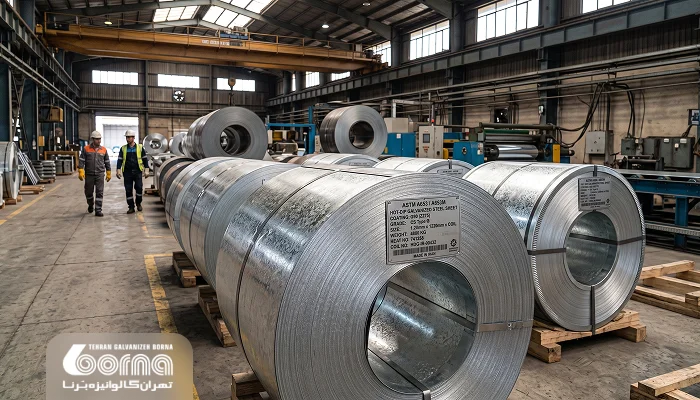
ASTM A653/A653M is a key technical specification for continuously hot-dip galvanized and galvannealed steel sheets. Beyond coating mass, it specifies requirements covering steel designations, chemical composition, mechanical properties, coating characteristics, bend performance, and product conformity.
To specify a galvanized steel sheet accurately under this standard, buyers should identify:
- Steel designation;
- Mechanical grade and class, where applicable;
- Metallic coating type;
- Coating designation, such as G90 or Z275;
- Nominal thickness and dimensions;
- Surface appearance and finish requirements;
- Required surface treatments;
- Applicable standard edition;
- Inspection, testing, and certification requirements.
Consequently, a general description such as "ASTM A653 galvanized steel sheet" is not a complete engineering purchase specification.
When sourcing galvanized steel coils and sheets, buyers should clearly state the required steel designation, mechanical grade, coating mass designation, measurement system, dimensions, and surface condition.
Clearly specifying these requirements helps buyers procure steel suitable for the intended fabrication process, corrosion exposure, and end-use performance requirements.
FAQs
Answers to common questions that may arise for you while reading this article.
این استاندارد، مشخصات فولاد پایه و پوشش ورق گالوانیزه گرم و گالوانیل را تعیین می کند و مبنای سفارش، تولید و کنترل کیفیت آن هاست.
A653 از واحدهای اینچ–پوند و A653M از واحدهای متریک استفاده میکند. مشخصات سفارش باید بر اساس یکی از این دو نوغ تنظیم شوند.
این کدها مقدار پوشش روی را نشان میدهند. Z275 یعنی حداقل میانگین 275 گرم روی بر مترمربع در مجموع دو طرف ورق؛ G90 معادل نزدیک آن بر مبنای اینچ–پوند است.
در شرایط محیطی یکسان، G90 به دلیل پوشش روی بیشتر، معمولاً دوام بالاتری در برابر خوردگی دارد.
برای فرم دهی، FS و برای کشش عمیق، DDS یا EDDS بررسی می شوند.
گرید فولاد، نوع و مقدار پوشش، ضخامت و ابعاد، کیفیت سطح و گواهی آزمون کارخانه
How would you rate this article?
Help us provide better content by registering your rating.
Related Articles
-

What Is Galvanizing? Methods and Applications
Learn how galvanizing protects steel, compare hot-dip and cold galvanizing methods, and explore their applications and key coating quality criteria.
60 minutes of study time -

Shipping Container Steel: Types, Thicknesses and Selection Guide
Which steel is best for shipping containers? Compare Corten, galvanized, and prepainted steel, with a thickness guide for container walls and roofs.
40 minutes of study time -

Steel Sheets and Plates for Industrial Sheds
Compare hot-rolled, galvanized and prepainted steel for industrial sheds. Explore sheet thicknesses, roofing and cladding applications, and selection guidelines.
40 minutes of study time
Comments Users
- آتنا حقیقی
مقاله بسیار علمی و آموزشی عالی بود. از این دست مقالات که پایه علمی و آموزشی دارند بیشتر در سایت قرار بدید.
Add a comment
What Is ASTM A653/A653M? Hot-Dip Galvanized Steel Guide